Featured news
-
The rise of volunteer tourism: Globe Aware featured in global edition of the New York Times
On Friday, September 17, 2010, Globe Awarewas featured in the global edition of the New York Times. Below is the article, including an interview with Catherine McMillan, Globe Aware’s vice president of volunteer communications.
The rise of volunteer tourism: Travelers help out while having fun
In today’s interconnected world, being environmentally responsible has evolved from fringe advocacy to mainstream behavior. Many travelers are also more aware of helping those less fortunate than themselves.
One emerging trend is volunteer tourism, or voluntourism, as it is known. Altruistic visitors partake in such projects as helping in orphanages or schools, teaching English or doing repairs and working on community projects.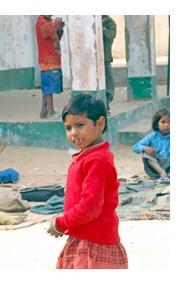 According to the International Ecotourism Society, voluntourism is taking shape as one of the fastest-growing markets in tourism today.
Globe Aware, a nonprofit organization based in Texas, organizes volunteer programs all over the world. ‘‘Our mission is twofold — to promote sustainability through volunteer work projects and to promote cultural understanding,’’ explains Catherine McMillan, Globe Aware’s vice president of volunteer communications. The organization specializes in connecting short-term volunteers with communities that have a variety of needs.
‘‘It isn’t just work,’’ she says. ‘‘As we say here, ‘Have fun and help people.’’’ This type of travel is very different from the normal tourist experience, adds McMillan. ‘‘You get a much deeper, nuanced experience of the culture of the place you are visiting,’’ she points out. ‘‘You create real relationships with the locals.’’ Volunteers experience both the beauties and the challenges that local people face, she adds. In Cambodia, for example, Globe Aware projects range from working with schools and Buddhist monasteries to building and distributing wheelchairs to land-mine victims.
One volunteer, who came to Globe Aware through the Make-A-Wish Foundation, had a condition in which he lost control of the movement in his legs. ‘‘He had experimental surgery and regained mobility, but his wish was to help give the gift of mobility to others,’’ says McMillan. ‘‘He went with his parents to Cambodia last year and built wheelchairs.’’ The 2010 Ecotourism and Sustainable Tourism Conference, held Sept. 8-10 in Portland, Oregon, featured Bruce Poon Tip as keynote speaker.
Poon Tip is the founder of Gap Adventures, an adventure travel company that promotes sustainable tourism. ‘‘We love changing people’s lives through travel,’’ said Poon Tip, ‘‘and ESTC is a perfect forum to help us advance that goal.’’ He explains that the company has proven through initiatives like its voluntourism projects that sustainability and travel needn’t be mutually exclusive.
Smart travel that respects local ecosystems, economies and communities not only provides a more exciting experience for travelers, but also is simply the right thing to do, says Poon Tip.
Hong Kong-based Kit Sinclair, an occupational therapist and ambassador for the World Federation of Occupational Therapists, frequently offers her expertise when she travels. ‘‘When I visit a city, I often offer to provide lectures, meet with students, visit hospitals or clinics, and discuss with staff about their work and their patients,’’ says Sinclair, who has done this throughout China and other parts of Asia.
While visiting Chiang Mai in Thailand a few years ago, Sinclair had a memorable adventure, ‘‘eating a local dish of worms/larvae at a roadside restaurant, heading into the hills for the most fantastic massage at a local hot springs and enjoying the company of local health care professionals, learning their culture, understanding their concerns and having a great time.’’ Another volunteer tourism organization, with offices in Bangkok and Luang Prabang, North by North-East Travel, specializes in trips to Southeast Asia. The company says it ‘‘provides meaningful volunteer work by aiming to empower communities through the transfer of vocational skills and leadership abilities, so they can benefit directly from tourism.’’ North by North-East has facilitated a number of projects in both Thailand and Laos, from educational ones to providing tsunami relief. Responsible tourism, it says, is not imposing one’s culture on others or conforming totally to a local culture. It is about a respectful and equal exchange of values.
Before jumping on the voluntourism bandwagon, says Globe Aware’s McMillan, travelers should make sure that the organization they are working with is legitimate and that they understand how donations are used for the benefit of the community.
‘‘Just handing out funds creates dependency, and you don’t want to do that,’’ McMillan points out. ‘‘Potential volunteers should be able to ask for references from past volunteer participants.’’ For Sinclair, the occupational therapist, the rewards of service ‘‘are in increased knowledge of the region and its health care needs, in sharing global perspectives with my local counterparts and in getting to know some really fantastic people.’’ -
The rise of volunteer tourism: Globe Aware featured in global edition of the New York Times
- Source: New York Times
On Friday, September 17, 2010, Globe Awarewas featured in the global edition of the New York Times. Below is the article, including an interview with Catherine McMillan, Globe Aware’s vice president of volunteer communications.
The rise of volunteer tourism: Travelers help out while having fun
In today’s interconnected world, being environmentally responsible has evolved from fringe advocacy to mainstream behavior. Many travelers are also more aware of helping those less fortunate than themselves.
One emerging trend is volunteer tourism, or voluntourism, as it is known. Altruistic visitors partake in such projects as helping in orphanages or schools, teaching English or doing repairs and working on community projects.According to the International Ecotourism Society, voluntourism is taking shape as one of the fastest-growing markets in tourism today.
Globe Aware, a nonprofit organization based in Texas, organizes volunteer programs all over the world. ‘‘Our mission is twofold — to promote sustainability through volunteer work projects and to promote cultural understanding,’’ explains Catherine McMillan, Globe Aware’s vice president of volunteer communications. The organization specializes in connecting short-term volunteers with communities that have a variety of needs.
‘‘It isn’t just work,’’ she says. ‘‘As we say here, ‘Have fun and help people.’’’ This type of travel is very different from the normal tourist experience, adds McMillan. ‘‘You get a much deeper, nuanced experience of the culture of the place you are visiting,’’ she points out. ‘‘You create real relationships with the locals.’’ Volunteers experience both the beauties and the challenges that local people face, she adds. In Cambodia, for example, Globe Aware projects range from working with schools and Buddhist monasteries to building and distributing wheelchairs to land-mine victims.
One volunteer, who came to Globe Aware through the Make-A-Wish Foundation, had a condition in which he lost control of the movement in his legs. ‘‘He had experimental surgery and regained mobility, but his wish was to help give the gift of mobility to others,’’ says McMillan. ‘‘He went with his parents to Cambodia last year and built wheelchairs.’’ The 2010 Ecotourism and Sustainable Tourism Conference, held Sept. 8-10 in Portland, Oregon, featured Bruce Poon Tip as keynote speaker.
Poon Tip is the founder of Gap Adventures, an adventure travel company that promotes sustainable tourism. ‘‘We love changing people’s lives through travel,’’ said Poon Tip, ‘‘and ESTC is a perfect forum to help us advance that goal.’’ He explains that the company has proven through initiatives like its voluntourism projects that sustainability and travel needn’t be mutually exclusive.
Smart travel that respects local ecosystems, economies and communities not only provides a more exciting experience for travelers, but also is simply the right thing to do, says Poon Tip.
Hong Kong-based Kit Sinclair, an occupational therapist and ambassador for the World Federation of Occupational Therapists, frequently offers her expertise when she travels. ‘‘When I visit a city, I often offer to provide lectures, meet with students, visit hospitals or clinics, and discuss with staff about their work and their patients,’’ says Sinclair, who has done this throughout China and other parts of Asia.
While visiting Chiang Mai in Thailand a few years ago, Sinclair had a memorable adventure, ‘‘eating a local dish of worms/larvae at a roadside restaurant, heading into the hills for the most fantastic massage at a local hot springs and enjoying the company of local health care professionals, learning their culture, understanding their concerns and having a great time.’’ Another volunteer tourism organization, with offices in Bangkok and Luang Prabang, North by North-East Travel, specializes in trips to Southeast Asia. The company says it ‘‘provides meaningful volunteer work by aiming to empower communities through the transfer of vocational skills and leadership abilities, so they can benefit directly from tourism.’’ North by North-East has facilitated a number of projects in both Thailand and Laos, from educational ones to providing tsunami relief. Responsible tourism, it says, is not imposing one’s culture on others or conforming totally to a local culture. It is about a respectful and equal exchange of values.
Before jumping on the voluntourism bandwagon, says Globe Aware’s McMillan, travelers should make sure that the organization they are working with is legitimate and that they understand how donations are used for the benefit of the community.
‘‘Just handing out funds creates dependency, and you don’t want to do that,’’ McMillan points out. ‘‘Potential volunteers should be able to ask for references from past volunteer participants.’’ For Sinclair, the occupational therapist, the rewards of service ‘‘are in increased knowledge of the region and its health care needs, in sharing global perspectives with my local counterparts and in getting to know some really fantastic people.’’ -
The Trip that Changed My Life
"In Cambodia I discovered I don't have to change who I am to help others." - Brianna Castillo
"My Ghana honeymoon taught me to slow down." - Michaela Mancusi -
The World Is Trying to Change You, Let It
The radical idea of being worked on by your surroundings
Updated December 9, 2025
In this Psychology Today article on biophilia—our innate human love of nature — Globe Aware Founder & Executive Director Kimberly Haley-Coleman explains how immersive volunteer travel and service abroad experiences allow the environment itself to transform us. Instead of seeing volunteering as “going somewhere to fix something,” she describes how Globe Aware intentionally places volunteers in communities and natural settings where “the environment works on them.” Whether mixing mud and ash to build homes in Kenya or pouring concrete alongside families in Guatemala, participants discover that they are being “built” internally while they help build externally. Haley-Coleman notes that stepping into unfamiliar surroundings—new foods, sounds, and daily rhythms—“reorganizes the molecules of your brain” and resets your perspective. The article connects this experience of volunteer vacations and ethical service travel with the concept of biophilia: nature, community, and place acting as collaborators in our growth and well-being. All we have to do, she emphasizes, is show up and allow the world to work on us.
-
TODAY SHOW: Places to Reinvent Yourself
- Source: TODAY SHOW
-
Vacationing like Brangelina


 Volunteers with the group Globe Aware are digging a trench to lay a water pipe in Costa Rica.Sarah McCall / Globe Aware
As the industry grapples with how to make money without compromising the results of the volunteer work, one thing is clear: more and more private citizens are ready to roll up their sleeves and lend a hand. "I was just so sick of just donating a gift at the end of the year," says Yates of his decision to spend a week volunteering in Costa Rica. "I worked my butt off."Getting in touch with your inner Angelina Jolie is easier than it used to be. The so-called voluntourism industry, which sends travelers around the globe for a mix of volunteer work and sightseeing, is generating almost as much praise and criticism as the goodwill ambassador herself. Are volunteer vacations--which have become so mainstream that CheapTickets recently started letting online customers book volunteer activities along with their vacations--merely overpriced guilt trips with an impact as fleeting as the feel-good factor? Or do they offer individuals a real chance to change the world, one summer jaunt at a time?
-
Volunteer in Thailand with Globe Aware
- Source: University at Buffalo
Kris Depowski O'Donnell
Kris is an education and communications professional, teaching at the University at Buffalo and working as a field producer providing medical reports to more than 100 television stations around the country. She loves making a difference through international volunteer work.
Why did you choose this program?Globe Aware offered a program that helps better the lives of captive Asian elephants. With this program, unlike some others in Thailand, the elephants' welfare is front and center at all times.
What did your program provider assist you with, and what did you have to organize on your own?
Globe Aware provided detailed descriptions of the project and outlined what volunteers should expect and bring with them to Thailand. They suggested hotels for me in Bangkok that were close to the meet up point and assisted with a reservation that I had an issue with. I took care of finding a hotel near the airport (flights from the U.S. almost always land around midnight and depart in the early morning hours).
What is one piece of advice you'd give to someone going on your program?
For this particular program, there wasn't much I didn't already know prior to arriving in Thailand because Globe Aware prepared me so well and I did a lot of research on my own as well. For friends who are thinking of going abroad I tell them GO! You will never regret it as long as you have an open mind, a sense of adventure (and humor) and love learning new things.
What does an average day/week look like as a participant of this program?
The days at Surin Project are well-coordinated. Everyone has breakfast together around 7 am. The food is freshly prepared and delicious. I'm vegan and they could easily accommodate my needs. We then have a work project for about an hour or so, which includes cleaning enclosures and chopping sugar cane. Then we walk the elephants in the forest for an hour or so. Then there's a break for lunch at a local eatery, then an afternoon work project followed by another walk in the forest where the elephants get to hang out with their friends and enjoy being elephants. We end the day by having dinner together. On two of the days, we walk the elephants to the river to bathe them, one of the highlights of the experience.
Going into your experience abroad, what was your biggest fear, and how did you overcome it and/or how did your views on the issue change?
I have traveled extensively through Europe, mainly on my own, so my fears were relatively limited. I think the biggest reservation I had was that I had never been to Asia (and was traveling on my own). I was also traveling to a very remote part of Thailand to work in a village with no air-conditioning, indoor plumbing, showers or hot water.
The way I overcame the fear is by reading as much information as I could ahead of time about what to expect and making sure I had the proper travel shots, medication, etc. Knowledge is power.
Is there anything else you'd like to share with prospective volunteers?
There is one important thing to know and it's something I've been asked about. Travelers should educate themselves about the plight of captive elephants in Thailand. It is a sobering and complicated issue. Elephants in Surin Project are allowed off chains for at least 5 hours a day and mahouts are not allowed to use the bullhook. But the Project exists alongside elephants who are used for the local circus. These elephants are chained 24 hours a day (when they are not performing), sometimes by all four feet.
It's difficult emotionally at times to see them in these conditions but I remind myself (and tell prospective volunteers) that it's critical the Project continue to receive support from volunteers. It shows the local people that tourists want to see elephants treated humanely and interacting with each other in a natural environment. I have taken part in Surin Project every year for the last three years so there isn't anything I would have done differently.
I can say that on the first day of my first visit (in 2014) I sat on my bed, on the floor, in 100 degree heat, with only a fan and mosquito netting and thought 'what in the world have I just done!?! I can't survive this!' Fortunately, that feeling lasted less than 24 hours. Then I was hooked. But it was briefly terrifying!
-
Volunteer Programs Helping Companies Connect Globally
- Source: Stratfor Enterprises
Corporations of all sizes have international suppliers, manufactures, agents and customers. Learning about the countries, communities and people is important in understanding how best to manage these business relationships.Kimberly Haley-Coleman of Globe Aware has decades of experience leading groups around the world on short-term volunteer experiences and creating and managing volunteer abroad solutions for groups and companies of every size.
Managing Risk and Reward When Volunteering Abroad
Nearly every public company in the world, and an increasing number of smaller companies, have some level of international engagement linked to their core business. It's part of the globally connected present. Industries ranging from medical, tech, import-export, energy, and finance to agriculture, production, construction, manufacturing, marketing, executive and risk management need to be alert to how geopolitical events could affect their people, product and profit.
At Stratfor, we believe success in working internationally can be developed with the application of geopolitical know-how: understanding the implications of historical, social and cultural mores, business practices, geography, politics and infrastructure of the countries where you choose to do business.
Tracking and managing those geopolitical risks can be nearly unmanageable for smaller companies, unless they have strategies and partnerships in place to complement what they can do themselves.
Kimberly Haley-Coleman has firsthand knowledge of what's at stake. She is founder and Executive Director of Globe Aware, a non-profit company that develops short-term volunteer programs in international environments. The company's goal is to provide an immersive volunteer experience for busy professionals who want to make a difference in a short amount of time doing projects that are actually requested by the communities they serve. Ventures in giving range across continents, from Southeast Asia to South America to Eurasia and beyond. Globe Aware works with communities on projects they identify and volunteers in both service work and learning more about the people with whom they are working. Globe Aware links volunteers with ventures and people all over the world.
I'll say it's sort of a mini-Peace Corps experience. While the typical Peace Corps experience is a 2 1/2 year commitment, this is a one week intensive immersion.
Globe Aware volunteers immerse themselves in service and in a community. Projects range from building schools in the Andes to building irrigation projects in Southeast Asia to teaching students in Guatemala to working at an animal rescue in Costa Rica or preserving elephant habitat in Thailand.
"I'll say it's sort of a mini-Peace Corps experience," Haley-Coleman explained. "While the typical Peace Corps experience is a 2 1/2 year commitment, this is a one-week intensive immersion. It's similar in the sense that you're giving back to the community, side-by-side with locals, as equals, on some project that they've chosen, that's important to them, that will hopefully make a really big impact in a short period of time."
Prior to launching Globe Aware, Haley-Coleman led a distinguished career in a broad number of private sector fields tied together by a central theme: helping internationally-focused businesses succeed. As both a for-profit and non-profit leader, Haley-Coleman has a deep appreciation for the value of global awareness.
She told Stratfor that when she decided to launch her company, it became apparent on where she should focus in providing a potentially life-changing experience: awareness and mitigation of risk, and the need to understand at a deeper level the place where you are working.
First and foremost, while we're looking for communities that have need, we also want them to be communities that are culturally expansive... It doesn't mean we're necessarily in the communities of the greatest need, we have been asked to have programs and places like Somalia, Darfur, Afghanistan, Syria, and in terms of risk and liability we just aren't in a position to go into war-torn countries… We really have to watch in terms of safety where were putting our volunteers, and then the projects we work on have quite a few criteria. We're not operating heavy equipment and machinery, we're not high on ladders, we're not Doctors Without Borders, so we are not handling bodily fluids and things like that.
But confounding and complicating efforts is a continually shifting menu of issues that face most developing regions. These changes can be disruptive to people and business as well as potentially dangerous. Or they can be rich in opportunity, if you are knowledgeable and poised to take advantage of change. Haley-Coleman said:
We are very actively monitoring the state department sheets that come from Canada, the U.S. and England. They do a pretty good job of any even minor possible situations, such as an expected protest or strike. Then we also monitor the CDC… alerts relating to health and things like dengue fever, Ebola, Zika. This is another thing that's always changing. Avian influenza and H1N1, when those things came out they really impact who's willing to go where, and who's allowed on a plane and what is deemed safe or not. However, we also are staffed locally by people who are based there looking at that situation. Those can change too. For example, in Puerto Rico it's not just about, "Hey is there a hurricane coming, is there a protest, is there a war?" It's also, "Can we get the materials right now to even put roofs on houses, given how difficult it is to get donations delivered in Puerto Rico?"
The rapid pace of change from one project to the next and from one country to the next takes careful pre-planning and close attention during trips. There are always challenges to managing multiple projects across multiple continents from the home office to the field: including, sometimes, evolving in-country laws and even some level of corruption. Haley-Coleman says she enjoys navigating it all.
If materials are expected and needed at a particular location, the idea is all the materials are there before the volunteers get there. Well, there have been times when we've been asked for bribes to get materials there on time.
These are the kinds of things that are always changing so this is an area where it is helpful to have somebody who is notifying our volunteers of what's going on, what to expect, how much to pay for this or for that, where to get the best value for your money in terms of bringing money into a country. Because that's changed too, there was a time when travelers checks were the primary safe currency, and I would never tell anyone to do that now… While we have seen, in terms of bribes, where we're more likely to encounter that, the volunteer, it might be invisible to the volunteer. For example, if materials are expected and needed at a particular location, the idea is all the materials are there before the volunteers get there. Well there have been times when we've been asked for bribes to get materials there on time.
Haley-Coleman loves what she does, and enjoys the challenges presented by constant change and the constant need to stay updated. But those challenges have also become central to most businesses in the digital age. The same skills needed to juggle projects and secure the safety of supplies and people are critical elements for success — whether your business is local, national or global in scope.
-
Volunteer Projects: designed, led, and owned by local communities
In this episode of The Devon Taylor Podcast, Kimberly Haley-Coleman, Founder and Executive Director of Globe Aware, challenges some of the most common assumptions about international volunteerism—and offers a more honest, effective model for how it should work.
Drawing on 25 years of experience running programs in 25+ countries, Kimberly explains why concepts like “poverty tourism” and the “white savior complex” persist—and how they can be avoided when projects are designed, led, and owned by local communities. Rather than volunteers arriving to “fix” things, she describes a model where communities identify their own priorities and outside volunteers come in as partners, not protagonists.
-
Volunteer travel experience in Peru with Globe Aware
- Source: Fresno State
A Fresno State lacrosse player shares her eye-opening volunteer travel experience in Peru and living with and learning from the Cuzco community. Enjoy!
Two weeks in Peru with Lauren Kiszely
7/24/2019 12:00:00 PM | By: Savannah Stoeckle / Communications Assistant
FRESNO, Calif. - For many college students summer vacation is a prime opportunity to visit with family and friends, go on vacation, attend concerts, make memories and escape from the books and mile high piles of lecture notes.
-
Volunteer travel to Lake Peten Itza, El Remate, Guatemala
- Source: Globe Aware
A family’s tradition of sending grandchildren, once they reach the age of 16, on trips to introduce them to different cultures and people and around the world continues. Here is a travelogue entry by Zeth to Guatemala with Globe Aware. Previous grandkids selected volunteer work in the Andes mountains of Peru, with the Roma people of Romania and in a small rural village in the West African country of Ghana.
Day One: Lake Peten Itza, El Remate, Guatemala
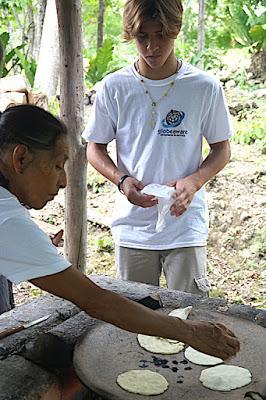 Moments like yesterday are why I’m a travel junkie. The guys still asleep, I took an early walk along a small road where we’re staying. What a treat! No city noise, only the idyllic sounds of nature: tropical birds unlike we hear at home … the occasional cry of a monkey, perhaps chiding her youngster … insects buzzing … and the crunch of my footsteps along the gravel-dirt road.
After a while a small older man walked in my direction, and I offered my best “Buenos dias, senor.” He offered me a mostly toothless smile and gently reached out toward me – but not his right hand, as if to shake hands, his left hand. He held onto my hand and we had this wonderful nodding and eye-to-eye exchange while he said something I couldn’t understand. Had he been an American in the U.S., I would have likely averted my eyes and pulled back thinking, “Why is he still holding onto my hand?” But he just continued to smile with old soul eyes and, as we parted, he blew me a kiss! For me travel is less about the big Eiffel Tower/Pyramids/Vatican imagery, and more these small, magical moments when we have real human contact with people we would otherwise never encounter. Blissful!
Day One was mostly orientation and a few hours of R&R. Globe Aware's local organization is Project Ix-Canaan, founded by Canadian Anne Lossing who came to Guatemala 20+ years ago toward the end of Guatemala’s long civil war. She wanted to empower the local Mayan community to protect their own rain forests, and identified the community first needed health, education and opportunity.
Over the years she and her Guatemalan husband, a doctor, have established a medical clinic and a dental clinic (at left) which is staffed largely by visiting clinicians from the U.S. and other places. (No patients on the weekend, so it was empty.)
They also have established an after-school youth development center and a women’s center, each of which we toured today.
We also visited a school where we’ll be teaching later in the week, and Anne pointed out shards of pottery on the ground – at least hundreds but easily 1,000 or more years old – that can be found in several places in this region called Peten. The Mayans believed that vessels had a kind of spirit and they would break most of their pots during sacrifices or in burials, and also every 40 years to start a new beginning.
-
Volunteer Vacation Primer

By: Manya Chylinski
No longer on the fringes of travel, voluntourism has attracted increasing numbers of travelers looking to learn new skills, meet people, and give back to the global community. In a recent Travelocity poll, 38 percent of repondents said they planned to volunteer while on vacation; thats up from just 6 percent in 2006. "People tell me that a vacation with us is the most meaningful experience of their lives," says David Minich of Habitat for Humanity. Here's how to plan one.
-
Volunteer Vacationers to return to Peru
- Source: Dallas Morning News
Dallas, TX (May 8, 2012) Volunteers Beth Karbe, Krystal Nix, Carol Barron, and Judy Keathley traveled with Globe Aware, a nonprofit organization that coordinates 17 unique volunteer programs in 15 countries worldwide, to San Pedro de Casta, Peru. While there, the group of volunteers began work on a badly needed irrigation system for community use. They now plan to return in order to offer the village a professionally executed solution to their water crisis.
Water is hard to come by in this secluded village high in the Andes Mountains of Peru. While it is only 50 miles from the Peruvian capitol of Lima, the journey usually takes over 5 hours due to the rocky terrain and single lane road. Globe Aware specializes in short term voluntourism, trips usually one week in duration. In that week all four women fell in love with the spirited people of San Pedro de Casta, especially the children. The ladies worked closely with the school and quickly realized the detrimental effect the lack of water has had on the village.
Kimberly Haley Coleman, Founder and Executive Director of Globe Aware comments on the impact a volunteer can make in one week, “we think of this more as like lighting a lamp. If a volunteer has an experience of helping someone side-by-side as part of a community you've lit that lamp of wanting to give back and wanting to volunteer and serving and knowing that joy.” Haley Coleman continues, “Volunteer Vacations are an ideal way to both encourage service while offering the benefit of international travel to small communities in the developing world. This experience exposes individuals to the beauties and challenges faced by others and also serves as a culturally immersive exercise”
Upon return to Florida: Beth, Krystal, Carol, and Judy decided to continue their work for the 999 residents of San Pedro de Casta. They organized and held the “Bring Water to San Pedro” fundraiser in Gainesville, Fl where over $20,000 was raised to fund an engineering team to excavate and build a proper irrigation system for the people of San Pedro de Casta.
The trip made an immeasurable impact on Beth Karbe’s view as well as the impetus to reevaluate her goals in San Pedro de Casta:
“This is a crucial need in San Pedro, since water is very scarce. The irrigation trench was essential, but despite spending hours digging every day and working very hard, we honestly didn’t get very far. The ground was bone dry and full of rock, and the 3 foot deep trench needs to run eight tenths of a mile! The new plan would not involve hand digging, nor dependence on infrequent volunteers, but construction by an engineering company with real machinery and big boy prowess. I am committed, I will go back. I will stay on this. And honestly I won't rest until it's done. This has been quite literally my life's purpose for 9 months and it will continue to be until the water flows.”
Work for this new irrigation system is planned for Summer 2012. If you would like to contribute to the Bring Water to San Pedro cause please visit : https://www.facebook.com/BringWater/app_101393123286933
About Globe Aware (R)
Globe Aware(R) is a 501 (c) 3 nonprofit charity that mobilizes short term volunteer programs around the world. These adventures in service focus on promoting cultural awareness and sustainability and are often compared to a mini "peace corps" experience. All volunteers are accompanied by a bilingual volunteer coordinator to assist the volunteer throughout their program. The program fee and the airfare to get there are fully tax deductible to the full extent of the law. Globe Aware is a member of International Volunteer Programs Association, Volunteers for Prosperity, the Building Bridges Coalition, was recommended for United Nations Consultative Status for Social and Economic Council, and administers the President's Volunteer Service Awards. Additionally, Globe Aware offsets its carbon emissions with Carbonfund.org, the country's leading carbon offset organization. Our carbon footprint is estimated at less than 70 tons annually, and we have chosen to support carbon-reducing projects in renewable energy to offset the CO2 that is produced in running our offices worldwide, from powering our offices to the transportation used to get to and from our work sites. This commitment places Globe Aware as an environmental leader in the volunteer abroad community and demonstrates proactive steps being taken in the fight against global climate change.
If you would like more information about this topic, or to schedule an interview with Globe Aware’s founder and Executive Director, Kimberly Haley-Coleman, please call Vaughn Hancock at 214-824-4562 or e-mailVaughn@globeaware.com
-
Volunteer Vacations with Globe Aware's Kimberly Haley-Coleman
Volunteer Vacations with Globe Aware's Kimberly Haley-Coleman Ep 172
I loved learning about Kimberly Haley Coleman and Globe Aware- an award-winning short-term volunteer abroad program available in 26 countries. I didn't know this was a thing, but I'm so glad it is! You can travel abroad to learn about a new place, help people and find purpose - this sounds like my kind of vacation! Tropical destinations, cooler weather, far away, or closer by, there's something for everyone. Kimberly says they can teach the skills; they just need kind, willing people to offer short-term support - solo, or as a group!
Kimberly previously worked in aerospace and held several High-level tech jobs. We briefly discussed people sending their loved ones' ashes to space to be released when she mentioned it. This isn't quite as far off from her previous careers as it might sound, but I'll let Kimberly talk about that in the episode.
When I asked Kimberly what message she'd like you to remember from this conversation, she said this: "It is inspiring and meaningful to engage in thoughtful service abroad" Kimberly has been working in the international field since 1990, so she's got her finger on the button of what is needed; and she is committed to everyone having a meaningful experience - on both sides of the service.
You can find all things GlobeAware here: https://www.globeaware.org/
They're on Instagram here: https://www.instagram.com/globeaware/?hl=en
And Facebook here: https://www.facebook.com/globeaware
You can see what these intentional vacations are like on YouTube: https://www.youtube.com/@GlobeAware
-
Volunteering and Healthy Living
- Source: Globe Aware
Using hard earned-vacation or paid time off to volunteer may not resonate with everyone right off the bat. Understanding how volunteer travel and volunteering both domestically and internationally creates a healthier lifestyle, while also helping and learning from others is important. Working together as equals with host communities is a major focus in all Globe Aware programs.
Read more and find out where to begin with Globe Aware’s volunteer abroad programs CLICK HERE
-
Volunteering for One Week in Peru with Globe Aware
- Source: The Wandering Class
Service, Sights, and Rainbows!
Many of you have shown interest and asked what it's like to spend a week of your vacation time volunteering abroad. We want to devote this post to showing you how a week of volunteering abroad can bring you so close to one country while giving back and simply...traveling.
We traveled with GlobeAware who organizes volunteer vacations which are typically one week; they are structured to give you time getting to know the community, work on various service project, spend time with locals, and of course see the surroundings like a tourist all in 7 days.
You heard us right, SEVEN days only! That still sounds too long? I did this over Thanksgiving week and only took 3 vacation days, yep, that's not a lot and I'm sure you can skip one year of Turkey. Your family will forgive you.
Here's a taste of the Cuzco program day by day.
Day 1 - Arrive in Cuzco!
Arrive early AM. Have a light breakfast, take a nap until the afternoon to catch up on unslept hours in the air.
We didn't think we were hungry yet but boy were we in for our first surprise - the incredible lunches! Lunches seemed to be the larger meal of the day, usually starting with a delicious rice soup and today we experienced quinoa crusted chicken! It's as delicious as it sounds - crispy & tender - why don't we have this?
After Lunch, Rosio our wonderful host, takes us through a walk through Cuzco city. I had no expectations of the city but the pure romance of it really captivated me. There were cafe's, restaurants, pubs, and shops with beautiful local artifacts.
Don't be surprised to see locals dressed in native bright dress walking with dressed Alpacas. Selfies are welcome for a small tip!
Quick Tip: Don't rely on debit cards to withdraw local cash - bring some cash to exchange in case the ATM's don't work!
Day 2 - Touring Cuzco and the Sacred ValleyYes! Another chance to see Peru: we were taken on a full day tour of the Sacred Valley. The trip included an overlook over Cuzco, Sacred Valley, Pisac Market, Salt Mines, and other stops.
Couldn't help but pull over and take in the Sacred Valley Views.
Day 3 - First Work Day
We've done so much so far, time to work!
One of our big projects included helping with painting the outside of the Alberque and building brand new bunk beds.
The House, or referred to al Alberque, also translates into Hostel, hosts kids that live in rural areas during the school week. The kids need to attend secondary school which is not primarily available in villages outside of Cuzco so their parents send them to the city during the week to live and attend school. Secondary school is highly valued in Peru and families will do whatever it takes to send their kids to continue their education. The Alberque hosting program is not readily available to any kids and due to lack of resources can only host a handful of kids at once.
The GlobeAware volunteers play a big role in sustaining the hosting program for these kids so they can continue their education.
We spent the day prepping the outside for painting and began painting.
As mentioned earlier, the lunches were something to look forward to.
Each afternoon after lunch we got the chance to take a rest or nap. Working in high altitude could tire you out if you're not acclimated. Then back to work until about 5:30 pm each day.
Dinner is also meticulously prepared for the volunteers; always a delicious surprise!
Day 4 - Work Day
We spend Day 4 in a similar manner: paint, lunch, nap, paint, dinner, and activity with the kids.
It was important for us to spend time with the kids at the Alberque, each night we were to create an activity for the group - we opted for Yoga! The kids were excited, loved the poses, and actually tuned into meditation. Try to get 20 teens to stay quiet an still for 10 minutes - it was miraculous!
My friend and co-volunteer Cassie inspired her team at Michigan Office Solutions and one of her clients to donate brand new clothes, tooth brushes & shoes to the kids staying at the Alberque.
One of our activities was to talk about dental health and the importance of brushing your teeth the correct way.
Finished painted building.. we got some help but it was a HUGE project complete! Also there are like 7 sides to the building!
Day 4 - Macchu Picchu
YAY!
This was our free day and of course we spent it exploring the World Heritage Site - Macchu Picchu.
This Cuzco program really allows you to experience Peru as a tourist and a local. With two and a half days of available excursions and tours you feel like you're still traveling while providing value to the local community.
Day 5 - Work Day Village
In the morning we picked up some fruit for the kids at a local market. I could have spent hours at this market eating, taking photos, and just taking in the local life.
Once we arrived at the village outside of Cuzco, with our bare hands & feet we created clay and put together a stove for a kindergarden class.
After lunch we helped with the construction of a large community greenhouse.
The volunteer program does require a donation which varies depending on where you go. The donation you bring goes toward materials used in the projects and the community you service. We were excited to see that this community could have a green house to continue growing fruits and veggies for their families.
It's just as interesting interacting with the kids, watching women dig & plant potatoes, and living life in this moment.
Just as we were about to leave, one of the families of the village wanted to treat us to a special dinner. They knew it was a special holiday for us (Thanksgiving Day) so they prepared something special for us:
Guinea Pig and Potatoes.
Tastes like chicken.
Day 6 - Last Work Day Building Beds
Because of previous volunteers, the Alberque was able to purchase materials, mattresses, and build brand new bunk beds for all of the kids. Us volunteers spent the day taking apart old bunk beds, putting together brand new ones, and furnishing them with fresh mattresses and pillows. By the end of the day we had put together 11 bunk beds for the girls section of the home. They were so excited!
some of the old bunk beds we took apartOn the last day the kids put on a huge dancing and singing production for the volunteers. It was a nice farewell!
2 AM - Leave for Rainbow Mountain.
Seven Day Adventure in Peru Complete.
Do we recommend it?
Absolutely.
Why?
- The week is very organized
- Projects vary from day to day
- The food is plentiful, home cooked, and delicious
- The host (Rosio) makes you feel welcome and part of her family
- You get to see Sacred Valley and Macchu Picchu (can't go wrong there!)
- You feel fulfilled with the work and relationship you made with Cuzco, Peru, and the community
- How can you get involved?
Go to Globe Aware (http://www.globeaware.org) and sign up for this or one of their other great programs.
-
Voluntourism - Volunteering on your vacation
Some vacations allow travelers to give back while they're away. CNN's Heidi Collins explains.
-
Voluntourism - Your Ticket to Cuba
- Source: Pink Magazine
Story and Photography by Donne Paine
I believe hurdles in life are meant to be jumped over are and not obstacles to stop us.
When initial plans to vacation in Cuba were derailed by hurricane Irma, my heart was broken but not my spirit. I had to find another way to get to this island, which sits only 90 miles off the coast of Miami.
Enter Globe Aware, a non-governmental organization (NGO) with volunteer programs in 17 third world countries. They are a “voluntourism” group—a mixture of volunteering and touring. Initially waitlisted, I joined a group of four in December for a week, and had an experience not to be forgotten.
Cuba is much more than classic cars and cigars. It is a country full of pride, friendly people, salsa music on every corner and ingenuity to be admired.
There has never been a more exciting time to take part in volunteer travel to Cuba! I was enchanted with a world unlike any I could imagine. Music abounded in the streets, there was hardly any traffic and smiles were everywhere. The embargo has meant severely restricted commerce and access to affordable food, but it has also preserved and insulated a culture unique in the world.
Globe Aware’s mission is to promote cultural awareness and sustainability. The eco-agricultural project our group was involved in was building a terraced garden of coconut and coffee plants to prevent mudslides onto a poor neighborhood, Casablanca, on the hillside of the Christo monument across the river from Havana. We would drive over in one of the classic cars and take a ferry back. And walk…wow did we walk.
Our accommodations were located in the historic center of Old Havana, a two-minute walk from the capitol and 10 minutes from the Plaza Vieja, in a neo-classical building from the 1920s, which still retains the original floors, doors and windows, with a balcony overlooking Old Havana. I was asked to add to the graffiti on the walls before I left.
We did a walking tour of Old Havana and the newly gentrified areas of the city. We went to the Che Guverra, Revolution Museum and The Museum of Art, where only Cuban artists are featured. The countryside of Cuba is beautiful and filled with rolling hills and exotic caverns. Our trip included an organic cigar plantation, complete with hand-rolling demonstration.
Cuba is changing in what looks like a positive way. I asked several members of our group to give a quote about their experience, which gives you an idea how others felt.
“A place lost in time and caught in an adolescent phase. Cubanos are full of love, pride and talent in all aspects of life, industry and art. The island, while so diverse, stands so united” —D. Mancinelli
“This was my fourth trip to Cuba in the past year. My first three were quick jaunts coming off cruise ships. But this trip I decided to spend 10 days to explore Havana. There is so much to see, experience and learn, and yet I only still saw so little. Everyday there were surprises and paradoxes. We saw pretty bad living conditions, but then went to a trendy nightclub, Fabrico de Arte Cubano, which was very nice. One big surprise was going to Nazdarovie, a restaurant nostalgic of the old Soviet Union days. When you go to Cuba, be open, observe, get off the beaten path.” —Juliet TeixsiraHere are a few questions that might help anyone interested in traveling to Cuba:
- Is it safe? At no time did I feel unsafe. The streets are busy with police walking the neighborhoods. No evidence of gangs, loitering unsavory types or panhandling.
- How much freedom do the people have? From my observation people moved freely about.
- Are Cubans friendly to Americans? Those I met were friendly to everyone.
- Were there any challenges going into the country? None, as long as your necessary paperwork is in order.
- Were there any challenges coming out of the county? None.
- Wifi? Almost non-existent. It is hard to find a wifi card, which is four dollars per hour and finding a hot spot is almost impossible.
- Toilet facilities? Most toilets do not have toilet paper, so bring your own.
- What is the food like? Rice and beans are served with every entrée. The food is simple and reflects the meager supply available. But ooh the Mohitos—the absolute best and filled with tons of mint!
- Gifts to buy? There is a large market that sells T-shirts, leather goods, bongo drums, and cigar accessories. There is also incredible art.
- Would I go back? Yes, and not just because of the salsa music at every watering hole, but because of the people, who are warm, friendly and eager to be recognized.
About Cuba:
Although home to more than 11 million people, Cuban culture has been shrouded in mystery to most North Americans because of prolonged economic and political strain between the United States and Cuba. Cubanos are proud, educated and often quite happy to share opinions. Isolated for years due to the “blockade,” their culture has been influenced by many others, none perhaps as heavily as Spain, Africa and the United States. Full of music, derelict buildings, joy and sorrow, Cuba offers few material pleasures, but immense humanitarian rewards.
© 2013 Pink Magazine & Millen Publishing Group, LLC.
-
Voluntourism comes to Cuba via Dallas
- Source: Lakewood Advocate
Globetrotter Kimberly Haley-Coleman takes East Dallasites around the world
By Brittany Nunn
As the Obama administration eases travel restrictions to the long-exiled island of Cuba, millions of Americans are preparing to flock there in the upcoming years. Among those celebrating is Kimberly Haley-Coleman.
Haley-Coleman, a multigenerational Lakewood resident, is the founder and director of Globe Aware, an organization that takes groups to countries for short-term, volunteer-centric trips.
It’s “voluntourism” at its best, taking people into 17 countries from Costa Rica to Cambodia, and Haley-Coleman is especially excited to add Cuba to her list.
Since the ’50s, when tension between the United States and communism reached its Cold War boiling point, Americans largely have been banned from traveling to the island nation, which sits less than 500 miles from U.S. soil. Cubans, conversely, have been banned from purchasing any American products, which has had a chilling effect on its fragile economy. Conflicts have since cooled, and the Obama administration has worked to lift some of the remaining restrictions, especially allowing for freedom of travel.
“Cuba is undergoing huge changes right now,” she says, “And of course, there are people who don’t like it, but Cuba is crumbling, and it has been crumbling since the Cuban Revolution. Well now the restoration process is happening again.”
[widgetkit id=139]
Which is exactly what Haley-Coleman wants to be part of, particularly because she understands the importance of cultural sensitivity. To her, work trips aren’t about going into other countries with an egotistical hero complex; they’re about helping in any way possible, while also giving neighbors an opportunity to immerse themselves in an unfamiliar culture.
“We can learn from each other,” Haley-Coleman says. “It gives us a chance to look at the beauties and the challenges of our own culture compared to the beauties and the challenges of others.”
In the 15 years since Globe Aware was founded, Haley-Coleman’s give-and-take mindset has attracted thousands of East Dallasites to travel with Globe Aware. Each trip is 10 days long and includes a task, such as assembling wheelchairs for landmine victims or helping schoolchildren.
“In Cuba, we’re fixing up playgrounds, working in elderly homes and working in schools,” she says. “We don’t go into places and tell them what they need. We ask them, ‘What is your challenge? How can we help you?’ And those are the projects that we do.”
Interested in participating in a trip to Cuba or another country? Go to globeaware.org.
- See more at: http://lakewood.advocatemag.com/2015/10/23/globetrotter-kimberly-haley-coleman-takes-east-dallasites-around-the-world/#sthash.Sm3czx56.dpuf -
Voluntourism films inspire others
- Source: Marin Independent Journal
California couple hopes their voluntourism films inspire others
A LITTLE MORE than three years ago, Steve and Joanie Wynn were looking to get out of a rut. Their video production company, Bayside Entertainment, was in a slump along with the rest of the economy.
So when Joanie Wynn stumbled upon Roadmonkey Adventure Philanthropy, a fledgling business started by a former New York Times war correspondent, she thought, here's a chance to do something different — document six women volunteering at a school for AIDS orphans in Tanzania while also enjoying a trip abroad and scaling Mount Kilimanjaro.
The experience was "life-changing." The Muir Beach couple returned with a lot more than a sense of adventure and some great footage; they discovered a new purpose and passion.
"We both traveled extensively before and to Africa before on various projects," says Joanie Wynn, who worked in Hollywood for clients such as Disney, Sony and Dreamworks. "But we were amazed by the transformation by the people who were on the trip, and we came back and thought, wow — these are the stories we really want to tell."
They launched Journey for Good (http://journeys4good.com), a website that lists voluntourism opportunities in hopes of inspiring others to participate. Their documentary, "A Journey for Good: Tanzania," which aired on public TV stations around the country, garnered four Emmy nominations and two Telly Awards. Now they're in talks with KQED to turn "Journeys for Good" into a series.
"Travel programs resonate with our audiences" says Scott Dwyer, KQED's director of programming. "'A Journey for Good' was the first travel show I've seen that expanded the definition what a vacation can be when you include 'doing good' at the same time. I think the producers are on to something."
The Wynns and their 9-year-old son, Ryan, a third-grader at Willow Creek Academy in Sausalito, left for Cambodia on Dec. 26 with Global Aware to document their second voluntourism trip together. (Last spring, Steve Wynn traveled with a group of women who built a playground at a school in Nicaragua.) This time, the family is joining others in building wheelchairs for land mine victims, teach English to Buddhist monks and a well at a home for the disabled.
Their focus is not only on the projects, but also on the people who volunteer — what motivated them, how it changed them.
"Our goal is to show people that this is a great way to travel differently," she says. "You can still go and experience a different culture, a different country and have an even richer and deeper experience by working side-by-side with local people."
Working with locals is an entirely different experience than arriving in a village or community to donate books or schoolbags, she says.
The Wynns got close to the teachers, students and local laborers as well as the bibi — the Swahili word for grandmother — who started the school as they built desks, refurbished classrooms and installed a water filtration system among other improvements together.
"We felt so honored to be invited into her home and share lunch each day," Joanie Wynn, 48, says. "Those are experiences you don't get to do just by being a tourist."
"The connection was not just with the people we were serving but the people we were following," Steve Wynn, 52, says. "It was really neat to see how they changed and how their view of the world changed. You could see the potential ripple effect."
Neither had done extensive volunteering before, although Steve Wynn, a Marin native and longtime cameraman who has worked with the Discovery, History and Travel channels, has been a Muir Beach volunteer firefighter since 2009 and the chief for the past year.
Voluntourism has been one of the fastest growing forms of travel, according to volunTourism.org, which follows the industry. Last year, global guidelines were developed for the first time to help voluntourism organizations focus on sustainable projects, community needs and responsibility.
That's important to the Wynns, too, who only establish relationships with nonprofit groups that embrace that philosophy for their series.
"It's really important that the trips that we do and the trips that we cover, to go with well-vetted organizations who have been around for a while, who focus on sustainable projects and that really have good in-country relationships with nonprofit organizations so you know that it's a good project that will actually benefit the local people," she says.
So far the Wynns have had to raise the money for the series themselves. "It's still a passion project," she says.
But the stories need to be told, they believe.
"If more people do the smaller projects, bit by bit, it can make a bigger impact," says Steve Wynn.