China Backgrounders
-
China Attractions
With its long and dramatic history, China offers endless cultural treasures. Famous attractions like the Terracotta Warriors, the Great Wall, colonial Shanghai and the imperial grandeur of Beijing are obvious magnets, but there's also sacred mountains and huge national parks to wander in.
Copyright 2010 Lonely Planet Publications, all rights reserved, used with permission
-
China Culture
Chinese Culture – Quick Facts, Travel Hints, & Tips
About the People
- China is very diverse, with 56 distinct ethnic groups. The numerically dominant group are the Han Chinese.
- Most social values are derived from Confucianism and Taoism with a combination of conservatism.
- China's major GDP was approximately 7.8 trillion as of 2009 according to the CIA World Factbook.
Non-Verbal Communication
- Given China’s high population and collectivist tradition, personal space is not as common or as valued as you may be accustomed to. Dorms house more students, public bathhouses are common, and homes and apartments are smaller than in the west.
- These patterns are changing as affluence grows along with the economy.
- Personal proximics, the distance people maintain in everyday interactions, is much closer than in the west.
- Being bumped in a crowd is normal so don’t take offense.
The Food
- The incredible variety found in Chinese cuisine may be owed, at least in part, to emperors holding a banquet of 100 dishes every meal. Chinese cuisine in America, Europe, and around the world is rooted in this diversity.
- Regional geographic and cultural differences have resulted in 8 different styles of food. Some of them may be familiar.
- Sometimes four styles are more heavily emphasized. These are Sichuan (Western China), Cantonese (Southern China),Shandong (Northern China), as well as Huaiyang Cuisine (Eastern China)
- In recent times, Beijing and Shanghai cuisine are considered by many to be two distinct styles all their own.
Architecture
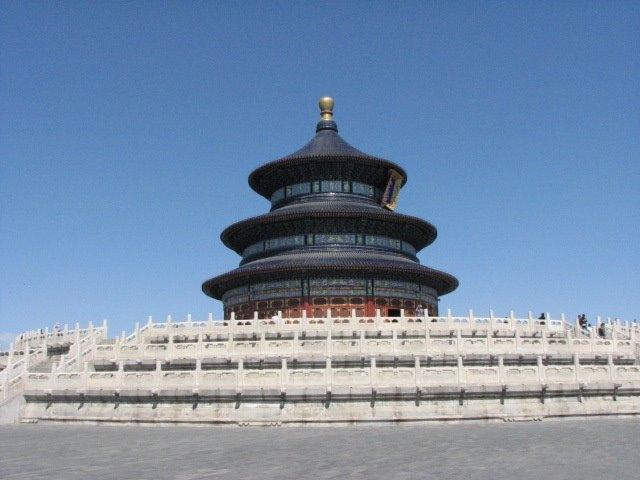
- Chinese architecture has a history dating back thousands of years. You will see structures dating back millennia, and others in similar styles that may be only ten years old.
- China does not have the same tradition of “historic/preservation districts” as the US and other western countries.
- Symmetry, width (as opposed to height), and Feng shui are prominent influences on Chinese architectural styles.
Transportation
- The rail network in China has doubled in the last 100 years and now services most of the entire nation.
- The physical state of the transportation network varies wildly by geographic location. Rural areas might still depend on horse-drawn transportation, meanwhile a modern maglev transverses Shanghai.
- Transportation is one of the major industries in China.
Education
.- The People’s Republic of China has a nationwide system of public education. Primary schools, lower and upper middle schools, and universities are all part of the mix. Nine years of schooling are compulsory.
- In the past 30 years, China’s population has become drastically more educated. In 1978 1.4 percent of college aged Chinese attended university. In 2005 that number had climbed to 20 percent.
- The literacy rate in China is 91 percent. It’s 95 percent for males and 86.5 percent for females.
- The communist party plays a prominent role in education.
Languages
- Chinese began to split into its many modern dialects around 1,000 years ago.
- Many of the languages of China are mutually unintelligible. The Chinese government and communist party encourages the use of Mandarin Chinese.
- According to the economist, up to one fifth of the population is studying English! That would mean almost as many English speakers as all of America!
Religion
- Traditionally, divination and fortune telling have played a major role in Chinese culture.
- Guan Jin, the Jade Emperor, and the Buddha are three of the most recognizable holy figures.
- Other religious concepts include Taoist exorcism, the supreme god Shang D, and others.
Music
- Chinese Opera has been popular for generations. The music includes string instruments and high-pitched vocal stylings.
- There is a wide variety of instrumental music in China, played solo or in ensembles.
- The oldest known instruments in China are bamboo pipes and gin.
- Instruments are typically divided based on their material – skins, gourd, bamboo, wood, silk, earth, metal, and stone. A traditional orchestra consists of bowed strings, woodwinds, plucked strings, and percussion.
- Rock, pop (C-Pop), hip-hop, and other styles have also become incredibly popular in recent times.
Globe Aware has gathered more tips, hints, and facts on Chinese culture from numerous sources in print, past volunteers and staff, and on the web. Find out more by registering today and experiencing genuine Chinese culture, from the music and cuisine of ancient China, for yourself! -
China Environment
The best time to visit China is generally either spring (March to May) or autumn (September to early November). Winters in China's north and northeast fall between November/December and March/April, and are very cold. North of the Great Wall and into Inner Mongolia and H?ilóngji?ng, temperatures can drop to -40
-
China Getting Around
Bus
Apart from bikes, buses are the most common means of getting around in the cities. Services are fairly extensive, buses go to most places and fares are inexpensive. The problem is that they are almost always packed. If an empty bus pulls in at a stop, a battle for seats ensues. Even more aggravating is the slowness of the traffic. You just have to be patient, never expect anything to move rapidly and allow lots of time to get to the train station to catch your train.
Improvements in bus quality have been matched by a steady increase in congestion on the roads. Bus routes at bus stops are generally listed in Chinese only, without Pinyin, so navigation can be difficult. In larger towns and cities, more expensive private minibus operations follow the same routes as the larger public buses.
Good maps of Chinese cities and bus routes are readily available and are often sold by hawkers outside the train stations. When you get on a bus, point to where you want to go on the map and the conductor (who is seated near the door) will sell you the right ticket. They usually tell you where to get off, provided they remember, but the bus stop may be quite a distance from your destination.
Car & motorcycle
For those who'd like to tour China by car or motorbike, the news is bleak. It's not like India, where you can simply buy a motorbike and head off. The authorities remain anxious about foreigners driving at whim around China, so don't plan on hiring a car and driving off wherever you want.
Hire
Cars can be hired in Hong Kong and Macau, but at the time of writing you needed a residency permit and a Chinese driving license to hire a car elsewhere (eg in B?ij?ng or Shàngh?i), effectively barring tourists from the roads.
If you want to use a car, it's easy enough to book a car with a driver. Basically, this is just a standard long-distance taxi. Travel agencies like CITS or even hotel booking desks can make the arrangements. They generally ask excessive fees
-
China Getting There and Away
Travel documents
Tickets
The cheapest tickets to Hong Kong and China can often be found either online or in discount agencies in Chinatowns around the world. Other budget and student travel agents offer cheap tickets, but the real bargains are with agents that deal with the Chinese who regularly return home (travelling at festival times such as the Chinese New Year will be more expensive). Firms such as STA Travel(www.statravel.com) with offices worldwide also offer competitive prices to most destinations. The cheapest flights to China are with airlines requiring a stopover at the home airport, such as with Air France to Beijing via Paris or Malaysian Airlines to Beijing via Kuala Lumpur. Air fares to China peak between June and September.
An increasing number of airlines fly to China, with Air China and China Eastern offering some of the cheapest fares. The cheapest available airline ticket is called an APEX (Advance Purchase Excursion) ticket, although this type of ticket includes expensive penalties for cancellation and changing dates of travel. Tickets listed in this section are quoted by airline offices and you will be able to find cheaper rates through travel agencies.
For browsing and buying tickets on the internet, try these online booking services:
Cheapflights.com(www.cheapflights.com) No-frills website offering flights to numerous destinations.
Expedia(www.expedia.com) Offers discounted tickets.
Fly China(www.flychina.com) Offers discounted tickets.
Lonely Planet(www.lonelyplanet.com) Use Travel Services to book multistop trips.
Lowest Fare(www.lowestfare.com) Offers discounted tickets.
One Travel.com(www.onetravel.com) Offers some good deals.
Opodo(www.opodo.com) Offers discounted tickets.
Orbitz(www.orbitz.com) Offers discounted tickets.
Travel.com.au(www.travel.com.au)
To bid for last-minute tickets online, try Skyauction(www.skyauction.com). Priceline(www.priceline.com) aims to match the ticket price to your budget.
Discounted air-courier tickets are a cheap possibility, but they carry restrictions. As a courier, you transport documents or freight internationally and see it through customs. You usually have to sacrifice your baggage and take carry-on luggage. Generally trips are on fixed, round-trip tickets and offer an inflexible period in the destination country. For more information, check out organisations such as the Courier Association(www.aircourier.org) or the International Association of Air Travel Couriers(IAATC; www.courier.org).
Air
Airports & airlines
Hong Kong, Beijing and Shànghai are China's main international air gateways. Hong Kong International Airport(HKG;0852-2181 0000; www.hkairport.com) is located at Chek Lap Kok on Lantau Island in the west of the territory. Beijing's Capital airport(PEK; arrivals & departures 010-6454 1100) has benefited from considerable investment and new terminals. Shànghai has two airports: Hongqiao airport(SHA;021-6268 8899/3659) in the west of the city and Pudong airport(PVG;021-6834 1000, flight information 021-6834 6912) in the east.
The best direct ticket deals are available from China's international carriers, such as China Eastern. Air China, China's national flag carrier, has a good safety record, and to date it has only had one fatal crash (in 2002). Air China should not be confused with China Airlines, the crash-prone Taiwan carrier.
Copyright 2010 Lonely Planet Publications, all rights reserved, used with permission
-
China History
Pre 20th Century History
The Chinese claim a history of 5000 years. The first dynasty, the Xia, is yet to be archaeologically verified but is accepted as lasting from 2200 to 1700 BC, and is described in legends as having been preceded by a succession of god-like sovereigns who bestowed the gifts of life, hunting and agricultural knowledge. The existence of ensuing dynasties is similarly hazy, but clarity increases with each era, revealing agricultural societies who practised ancestor worship.
The Zhou period (1100-221 BC) saw the emergence of Confucianism and the establishment of the 'mandate of heaven' whereby the right to rule was given to the just and denied to the evil and corrupt, leading to the later Taoist view that heaven's disapproval was expressed through natural disasters such as earthquakes, floods and insect plagues.
The Chinese were united for the first time during the Qin dynasty (221-207 BC). The dynasty standardised the writing system and completed construction of the Great Wall. The ensuing Han dynasty (206 BC-AD 220) featured much military conflict and the creation of the Three Kingdoms. Curiously, these war-torn centuries also saw the flowering of Buddhism and the arts.
Unity arose out of the chaos under the Sui dynasty (581-618) and was consolidated under the Tang (618-907), commonly regarded as the most glorious period of Chinese history. Military conquests re-established Chinese control of the silk routes and society was 'internationalised' to an unprecedented degree. Buddhism flourished under the Tang, splitting into two distinct schools: the Chan (Zen) and Pure Land (Chinese Buddhist).
The Song dynasty (960-1279) was marked by a revival of Confucianism and urban and commercial revolutions - it was during the 13th century that Marco Polo commented on the grand scale of China's prosperous cities. Genghis's grandson Kublai Khan's Yuan dynasty (1206-1368) established a capital at what is now Beijing and militarised the nation's administration. The novice Buddhist Hongwu established the Ming dynasty (1368-1644), with capitals at Beijing ('Northern Capital') and Nanjing ('Southern Capital') .
The Portuguese were the first Europeans to arrive in China, anchoring off the coast in 1516. A trade mission was established in Macau by 1557, but it was not until 1760 that other powers gained secure access to Chinese markets via a base in Guangzhou. Trade flourished, but in China's favour, as British purchases of silk and tea far outweighed Chinese purchases of wool and spices. In 1773 the British decided to balance the books by encouraging the sale of opium. By 1840 the Opium Wars were on.
The resulting treaties signed in British favour led to the cession of Hong Kong and the signing of the humiliating Treaty of Nanking. A subsequent land-grabbing spree by Western powers saw China carved up into spheres of influence. The Chinese agreed to the US-proposed free-trade Open Door Policy and all of China's colonial possessions soon evaporated, with Vietnam, Laos and Cambodia falling to the French, Burma to the British, and Korea and Taiwan to Japan.
Modern History
The first half of the 20th century was a period of utter chaos. Intellectuals searched for a new philosophy to replace Confucianism, while warlords attempted to grab imperial power. Sun Yatsen's Kuomintang (KMT, or Nationalist Party) established a base in southern China and began training a National Revolutionary Army (NRA). Meanwhile, talks between the Soviet Comintern and prominent Chinese Marxists resulted in the formation of the Chinese Communist Party (CCP) in 1921. Hopes of the CCP aligning with the KMT were dashed by Sun Yatsen's death and the rise from the KMT of Chiang Kaishek in Beijing, who favoured a capitalist state supported by a military dictatorship.
The communists were split between those who focused on urban revolt and those who believed victory lay in uniting the countryside. Mao Zedong established his forces in the mountains of Jinggang Shan, and by 1930 had marshalled a guerrilla army of 40,000. Chiang mounted four Communists extermination campaigns, each time resulting in communist victories. Chiang's fifth campaign was very nearly successful because the communists ill-advisedly met the KMT head-on in battle. Hemmed in, the communists retreated from Jiangxi north to Shaanxi - the Long March of 1934. En route the communists armed peasants and redistributed land, and Mao was recognised as the CCP's paramount leader.
In 1931 the Japanese took advantage of the chaos in China and invaded Manchuria. Chiang Kaishek did little to halt the Japanese, who by 1939 had overrun most of eastern China. After WWII, China was in the grip of civil war. On 1 October 1949 Mao Zedong proclaimed the foundation of the People's Republic of China (PRC), while Chiang Kaishek fled to Taiwan. The USA continued to recognise Chiang as the legitimate ruler of China.
The PRC began its days as a bankrupt nation, but the 1950s ushered in an era of great confidence. The people were bonded by the Korean War, and by 1953 inflation had been halted, industrial production was restored to prewar levels, the redistribution of land had been carried out and the first Five Year Plan had been launched. The most tragic consequence of the Party's dominance was the 'liberation' of Tibet in 1959. Beijing oversaw the enforced exile of the Tibetan spiritual leader and initiated the genocide of a precious culture. To this day hundreds of monasteries still lie in ruins.
The next plan was the Great Leap Forward, aimed at jump-starting the economy into first-world standards. Despite oodles of revolutionary zeal, the plan was stalled by inefficient management coupled with floods, droughts and, in 1960, the withdrawal of all Soviet aid. The Cultural Revolution (1966-70) attempted to draw attention away from these disasters by increasing Mao's personal presence via his Little Red Book of quotations, purging opponents and launching the Red Guard. Universities were closed, intellectuals were killed, temples were ransacked and reminders of China's capitalist past were destroyed.
Beijing politics were divided between moderates Zhou Enlai and Deng Xiaoping and radicals and Maoists led by Mao's wife, Jiang Qing. The radicals gained the upper hand when Zhou died in 1976. Hua Guofeng, Mao's chosen successor, became acting premier. Public anger at Jiang Qing and her clique culminated in a gathering of protesters in Tiananmen Square, and a brutal crackdown led to the disappearance of Deng, who was blamed for the 'counter-revolutionary' gathering. Deng returned to public life in 1977, eventually forming a six-member Standing Committee of the CCP.
With Deng at the helm, and the signing of the 1984 Sino-British Joint Declaration, China set a course towards economic reconstruction, although political reform was almost nil. General dissatisfaction with the Party, soaring inflation, corruption and increased demands for democracy led to widespread social unrest, typified by the demonstrations of 1989 that resulted in the bloody Tiananmen Square massacre.
China since 1989
For some three years, China’s politics were almost frozen, but in 1992, Deng, the man who had sent in the tanks, made his last grand public gesture. That year, he undertook what Chinese political insiders called his ‘southern tour’, or nanxun; the Chinese term had been used in premodern times to refer to the emperor visiting his furthest domains. By visiting
Sh?nzhèn, the boomtown on the border with Hong Kong(and appearing to local news reporters riding a golf buggy in a theme park), Deng indicated that the economic policies of reform were not going to be abandoned. The massive growth rates that the Chinese economy has posted ever since have justified his decision: in the first decade of the 21st century, annual growth has run at a historically unprecedented rate of about 10%. Deng also made another significant choice: grooming Jiang Zemin – the mayor of Shàngh?i, who had peacefully dissolved demonstrations in Shàngh?iB?ij?ng
The post-Deng leadership has taken on something like a regular pattern. After two five-year terms for Jiang Zemin, the 16th and 17th Party Congresses in 2002 and 2007 confirmed Hu Jintao as Jiang’s successor. Jiang’s period in office was marked by huge enthusiasm for economic development, along with cautious political reform (for example, the growth of local elections at village level, but certainly no move to democracy at higher levels). Since 2002, Hu and his prime minister, Wen Jiabao, have made more efforts to deal with the inequality and poverty in the countryside, and this remains a major concern of the party, along with reform of the CCP itself.
In the two decades since 1989, China has become far more influenced by globalised modernity than even in the 1980s. China has placed scientific development at the centre of its quest for growth, sending students abroad in their tens of thousands to study science and technology and develop a core of scientific knowledge within China itself.
The country also has a powerful international role. China is a permanent member of the UN Security Council. It is also seeking economic and diplomatic influence in Africa South America . However, China’s preference for remaining neutral but friendly may not be able to last long into the new century: crises such as the Russian incursion into Georgia in 2008, the ever-volatile North Korean situation, and the scramble for mineral resources in Africa
Nationalism has also become a popular rallying cry at home. This does not necessarily mean xenophobia or anti-foreign sentiment, although there are occasions (such as the reaction to the 1999 NATO bombing of the Chinese embassy in Belgrade Kosovo <spanWar) that have led to violence against foreign targets and persons. But it is clear that China’s own people consider that the country’s moment has arrived, and that they must oppose attempts – whether by the West, or Japan <span– to prevent it taking centre stage in the region. Its long history has, for now, begun to bring China back to the prominence it once enjoyed.
Copyright 2010 Lonely Planet Publications, all rights reserved, used with permission
-
China Introduction
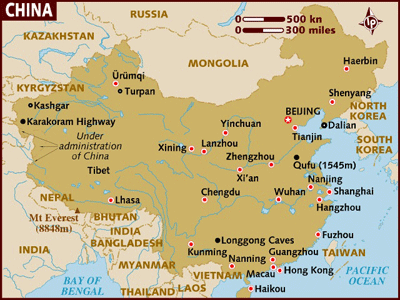
China isn't a country - it's a different world. Unless you have a couple of years and unlimited patience, it's best to follow a loose itinerary here, such as following the Silk Road, sailing down the Yangzi River, or exploring the Dr Seuss landscape of Guangxi Province.
From shop-till-you-drop metropolises to the desert landscapes of Xinjiang, China is a land of cultural and geographic schisms. It's not that it has completely done away with its Maoist past - it's more that the yin of revolutionary zeal is being balanced by the yang of economic pragmatism.
-
China Money
For most travellers plastic should do the job, with ATM locations growing surely but steadily in the more sizeable cities. Credit cards are also gaining ground in China, with Visa, MasterCard, American Express (branches in Beijing, Shanghai, Guangzhou and Xiamen), JCB and Diners Club the most common. Cards can be used in most mid to top-range hotels, Friendship and department stores, but cannot be used to finance your transportation costs. If cards aren't an option then cash will never fail and exchanging currency is relatively easy. Out in the west and in the countryside bring a mixture of cash and travellers cheques. Counterfeit notes are a problem so make sure when using cash you examine large denomination notes when given to you as change from street vendors.
Changing Your Money
Foreign currency and travellers cheques can be changed at the main branches of the Bank of China, the tourist hotels, Friendship Stores and some department stores. Hotels usually charge the official rate. You will need to keep your exchange receipts if you want to change any of your remaining RMB at the end of your trip. Travellers cheques are the best option because they are safer and the exchange rate is more favourable than that for cash; Thomas Cook, American Express and Visa are most commonly accepted. If you have to exchange cash, stay away from less reputable sources that may try and slip you counterfeit notes.
Money Tips
All four- and five-star hotels and some top-end restaurants add a tax or 'service charge' of 10% or 15%, which extends to the room and food; all other consumer taxes are included in the price tag.
Generally, eastern China is much more expensive than the western part of the country. Visitors to eastern China could get by on around US$50.00 a day, but it would be a challenge. Budget travellers in western China should be able to keep costs down to US$25.00 per day. The main drain on savings tends to be long train journeys. Food is cheap throughout China, and if you're careful you won't have to spend much more than US$7.00 a day on meals. However, the bottom line is that you'll be charged the 'tourist price' a lot of the time.
Sample Price Guide
- food court meal
- Y 16
- American hamburger
- Y 12
- sending postcard overseas
- Y 4
- internet cafe per hour
- Y 2
- pack of 20 cigarettes
- Y 3
- small bottle of beer from corner shop
- Y 2
- draught pint of local beer from a bar
- Y 10
- International Herald Tribune
- Y 23
- city bus ticket
- Y 1
- pirated dvd
- Y 8
- litre of petrol
- Y 3
- small bottle of water
- Y 2
- souvenir t-shirt
- Y 25
- Street snack - large lamb kebab
- Y 2
Average Room Prices
Low Mid High Deluxe US$25-35 US$35-100 US$100-300 US$300+ Average Meal Prices
Low Mid High Deluxe US$1-5 US$5-10 US$10-25 US$25+ Tipping
Tipping is not really expected in mainland China.
Currency
The Bank of China issues RMB bills in denominations of one, two, five, 10, 20, 50 and 100 yuan. Counterfeit notes are a problem in China. Very few Chinese will accept a Y50 or Y100.00 note without first checking to see whether or not it's a fake. Notes that are old, tattered or torn are also sometimes hard to spend. You can exchange notes for new ones at the Bank of China - counterfeits, however, will be confiscated. Local Chinese have a variety of methods for checking notes, including checking the watermark, the drawn lines (more distinct in fake notes) and colour (more pronounced in counterfeit notes). The texture of a fake note also tends to be smoother than authentic notes. Examine large denomination notes if given to you as change by street vendors; they could well be dumping a forged banknote on you.
Coins come in denominations of one yuan, five mao, one mao and five fen. Paper versions of the coins remain in circulation.
Copyright 2010 Lonely Planet Publications, all rights reserved, used with permission
-
China When to Go
Spring (March-April) and autumn (September-October) are the best times to visit China, though the higher altitude areas of Tibet, Qinghai and Western Sichuan are best visited in high summer (June-September). Daytime temperatures range from 20