Cambodia Backgrounders
-
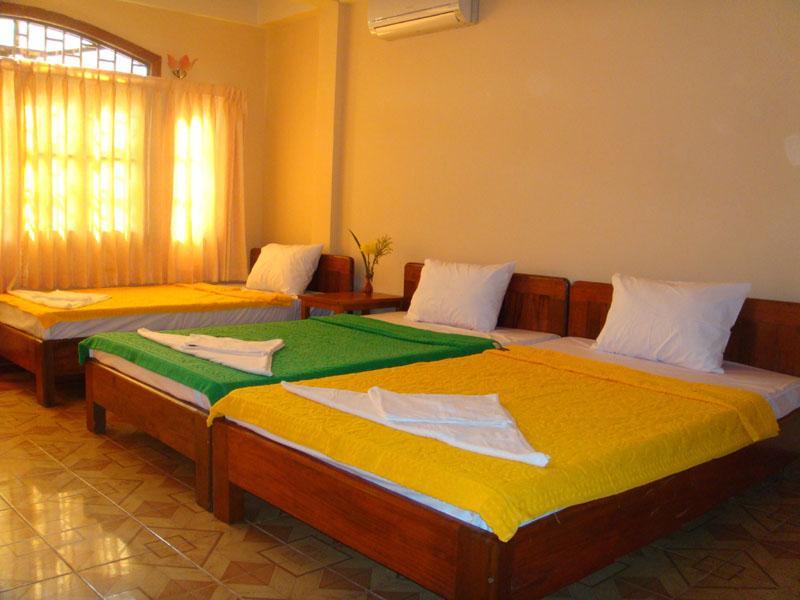
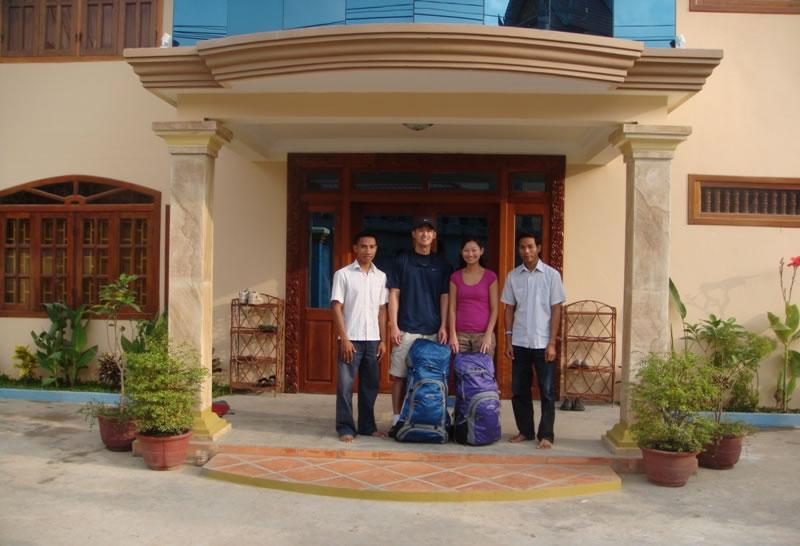
Cambodia Accommodations
-
Cambodia Attractions
Phnom Penh
Phnom Penh: the name can’t help but conjure up an image of the exotic. The glimmering spires of the royal palace, the fluttering saffron of the monks’ robes, and the luscious location on the banks of the mighty Mekong; this is one of Asia’s undiscovered gems. But it’s also a city on the move, as a new wave of investors move in, perhaps forever changing the character, and skyline, of this classic city. Phnom Penh is a crossroads of Asia’s past and present, a city of extremes of poverty and excess, of charm and chaos, but one that never fails to captivate.
Angkor
The celebrated temples of Angkor are Cambodia's greatest tourist attraction. The 100 or so temples are the sacred remains of what was once a much larger administrative and religious centre, and were built between the 9th and 13th centuries to glorify a succession of Khmer kings. The three most magnificent temples are Bayon, Ta Prohm and the immense Angkor Wat.
Most of Angkor was abandoned in the 15th century and the temples were gradually cloaked by forest. The site became the source of scholarly interest in the late-19th century after the publication of Voyage à Siam et dans le Cambodge by French naturalist Henri Mouhot. Efforts were undertaken to clear away the jungle vegetation that threatened to completely destroy the monuments, and restoration continues today.
Battambang
Cambodia's second-largest city is an elegant riverside town, home to some of the best-preserved colonial architecture in the country. Battambang used to be off the map for road travellers, but facilities have been improved and it makes a great base for visiting the nearby temples and villages. The most scenic river trip in the country links Battambang with Siem Reap.
It's a secondary hub on the overland route between Thailand and Vietnam, and if National Hwy 6 from Poipet to Siem Reap is ever upgraded it'll become an even smaller hub. The network of charming old French shop houses clustered along the riverbank is the real highlight here, and there are a number of wats scattered around the town. The small museum has a collection of Angkorian-era artefacts, and beyond the town there's a number of hilltop temples, yet more wats and a large lake. Battambang is a pretty bumpy 293km (181mi) bus or share-taxi ride from the capital.
Sihanoukville
Surrounded by white-sand beaches and undeveloped tropical islands, the port city and beach resort of Sihanoukville (Krong Preah Sihanouk), also known as Kompong Som, is the closest thing you get to the Costa del Cambodia. Visitor numbers have risen steadily in recent years – and are likely to skyrocket if flights to Siem Reap are resumed – but for the time being, despite the boomtown rents, the city and its sandy bits remain pretty laid-back.
Copyright 2010 Lonely Planet Publications, all rights reserved, used with permission
-
Cambodia Challenges
Despite the beautiful backdrop, life is no picnic for the average Cambodian. It remains one of the poorest countries in Asia and it’s a tough existence for much of the population, as they battle it out against the whims of nature and, sometimes, of their politicians. According to the United Nations Development Programme (UNDP; www.undp.org), Cambodia remains poorer than Mongolia and El Salvador, just scraping in ahead of Mauritania, while Transparency International (www.transparency.org), the anticorruption watchdog, rates the country a lowly 151 out of the 163 countries ranked. Income remains desperately low for many Khmers, with annual salaries in the hundreds of dollars, not thousands, and public servants such as teachers unable to eke out a living on their meagre wages.
Cambodia’s pristine environment may be a big draw, but much of it is currently under threat. Ancient forests are being razed to make way for plantations, rivers are being sized up for major hydroelectric power plants and the south coast is being explored by leading oil companies. All this helps add up to an ever-stronger economy, which is growing at an incredible 10% a year, but it’s unlikely to encourage the ecotourism that is just starting to develop.
Landmines are still a real danger in Cambodia, with up to six million live mines dotted around the countryside and near the border with Thailand.
More on Cambodia's Challenges>
Copyright 2010 Lonely Planet Publications, all rights reserved, used with permission
-
Cambodia Culture
Cambodian Culture – Quick Facts, Travel Hints, & Tips
 About the People
- Phnom Penh is home to about 1.2 million people, around 10% of the nation’s overall population of 11.4 million.
- The overwhelming majority of Cambodians are of Khmer heritage, with the largest minority group being the Cham-Malays mostly established near the Mekong north of Phnom Penh.
- Khmer is the official language, spoken by over 90% of the population. You may also hear French, Vietnamese, Chinese, or English during your stay.
- By some estimates around 80% of Cambodians are connected to subsistence farming. As in many developing nations, poverty and malnutrition are no strangers to those living in rural Cambodia.
- The cambodian money is the "riel"
Non-Verbal Communication- As with many Southeast Asian cultures, Cambodia is a collectivist society. If you look for cues and take the time to ask questions, you’ll find that you can learn a lot through non-verbal communications. For instance –
- Dress is just as likely to be used to blend in as to express individuality.
- Time and punctuality are not eternal worries as they are in the west
- Guests are generally quiet unless spoken to, and mealtimes are not always the social event that westerners are accustomed to.
- A smile doesn’t necessarily mean agreement or happiness
- Direct eye contact is generally considered disrespectful, particularly across the sexes
The Food- Cambodian cuisine is in many ways familiar if you’re accustomed to Thai or Vietnamese food. Much as Thai cuisine has creative uses for Fishsause, Cambodians are noted for the use of prahok in cooking, a type of fish paste.
- China and India have also influenced local cuisine.
- One of the most popular or common dishes is called ka tieu.
- A Cambodian meal commonly consists of three or four separate items – perhaps one sweet, one sour, one savory. As occasionally happens in neighboring Thailand and Laos, chili’s are usually left to you to add.
Transportation- Many of the roads in Cambodia are unpaved, so be prepared for bumpy rides outside the main population centers.
- Bus travel around Cambodia is not allowed, but trains and air are viable alternatives.
- If you’re traveling by foot or car away from populated areas be aware that there are un-detonated landmines. In cases where you’re not sure how safe the terrain is, it’s best to seek out and trust the judgment of the local people.
Education- The Khmer Rouge abolished the education system in the mid 1970’s, and many teachers and scholars were forced to flee the country or were killed.
- The current constitution establishes that there shall be compulsory education for nine years.
- Partly due to the lingering effects of past regimes, the literacy rate hovers around 74% for the general population, a figure much higher in women and lower in men.
Religion- Cambodians are predominantly Therevada or Hinayana Buddhist.
- Islam is practiced in the east, and Christianity is growing in the areas around Phnom Penh.
- All religions suffered persecution under the Khmer Rouge regime.
Globe Aware has gathered more tips, hints, and facts on Cambodian culture from numerous sources both in print, from past volunteers, and on the web. Find out more by registering today and experiencing genuine Cambodian culture, from Angkor Wat to the unique cuisine and history, for yourself. From helping to build wheel chairs for Cambodia's landmine victims to other projects addressing cambodia's challenges, there are many ways you can help by signing up today. -
Cambodia Environment
Cambodia is bounded on the west by Thailand, on the north by Laos, on the east by Vietnam and to the south by the Gulf of Thailand. It's about half the size of Vietnam or Italy. Topographically, the country is dominated by the mighty Mekong River, which cuts a swathe through the country from north to south; the fish-filled Tonle Sap (Great Lake); the Elephant and Cardamom mountains in the southwest; the Dangkrek Mountains along the Thai border; and the Eastern Highlands in the northeast. Most Cambodians live on the fertile central plains of the Mekong-Tonle basin.
The biggest threat to Cambodia's natural environment is the logging frenzy which reduced the country's forest coverage from 75% in the mid-1960s to just 49% in mid-1993 - and with the government constantly strapped-for-cash, there's little reason to believe that the stripping of such assets will come to a halt soon. The number of national parks is slowly growing, but with illegal logging as rife as legal concessions, no tree in Cambodia is safe. The parks include Bokor, on the south coast; Ream, near Sihanoukville; Kirirom, outside Phnom Penh; and Virachay, bordering Laos and Vietnam. A number of endangered species which are elsewhere extinct are thought to be hidden in the more remote habitats, including elephants, tigers, lepoards, rhinos, gibbons, bats and crocodiles. The most commonly found fauna are varieties of butterflies, snakes and birds such as cormorants, cranes and ducks.
Cambodia's climate is governed by two monsoons: the cool, dry northeastern monsoon from November to February, and the humid southwestern monsoon from May to October. Monsoon rains fall mostly in the afternoon, and account for 70 to 80% of annual rainfall. Average annual temperatures vary from 21 to 35
-
Cambodia Events
Lunar New Year is celebrated by ethnic Chinese and Vietnamese in late January or early February. The Khmer New Year celebrations bring the country to a standstill for three days in mid-April - a fair amount of water and talcum powder gets thrown around at this time, so it's a lively but noncontemplative time to visit. Chat Preah Nengkal, the Royal Ploughing Festival, takes place near the Royal Palace in Phnom Penh in early May. The Khmer calendar's most important festival is Bon Om Tuk, celebrating the end of the wet season in early November - it's the best time to visit Phnom Penh or Siem Reap. Banks, ministries and embassies are closed during all public holidays and festivals.
Public Holidays:
January 1 - New Year's Day
March 8 - Women's Day
April 13 - Khmer New Year
May 1 - Labour Day
June 1 - International Children's Day
September 24 - Constitution Day
October 23 - Paris Peace Agreement
October 30 - King's Birthda
November 9 - Independence Day
December 10 - UN Human Rights DayCopyright 2010 Lonely Planet Publications, all rights reserved, used with permission
-
Cambodia Facts
Visas:A one-month visa, available on arrival at Pochentong and Siem Reap airports, costs 20.00 for a tourist visa and 25.00 for a business visa.
Health risks: cholera, hepatitis, malaria, typhoid, rabies, Japanese B encephalitis
Time Zone: GMT/UTC +7
Dialing Code:855
Electricity: 230V ,50Hz
Weights & measures: Metric- Annual freshwater fish catch:290, 000
-
Cambodia Getting Around
Boat
Cambodia's 1900km of navigable waterways are a key element in the country's transportation system, particularly given the state of many roads and the railways. North of Phnom Penh, the Mekong is easily navigable as far as Kratie, but there are no longer regular passenger services on these routes as the roads have taken all the business. There are fast-boat services between Siem Reap and Battambang, and Tonlé Sap Lake is also navigable year-round, although only by smaller boats between March and July.
Traditionally the most popular boat services with foreigners are those that run between Phnom Penh and Siem Reap. The express services do the trip in as little as five hours, but the boats between Phnom Penh and Siem Reap are horrendously overcrowded and foreigners are charged almost twice the price of Khmers for the 'privilege' of sitting on the roof. It is not the most interesting boat journey in Cambodia, as Tonlé Sap Lake is like a vast sea, offering little scenery. It's much smarter to take a bus on the new road instead.
The small boat between Siem Reap and Battambang is more rewarding, as the river scenery is truly memorable, but it can take forever. Whichever fast-boat journey takes your fancy, you may well end up on the roof so remember to use sun block and wear a head covering.
There are now longtail rocket boats operating on northern stretches of the Mekong between Stung Treng and the Lao border. These are super fast, but are super dangerous if overcrowded or travelling after dark. Never risk departing late if it means travelling at night.
Many travellers use the fast boat between Sihanoukville and Krong Koh Kong to travel between Thailand and Cambodia.
Bus & tram
Bus
The range of road transport is extensive in Cambodia. On sealed roads, large air-conditioned buses are the best choice. Elsewhere in the country, a pick-up truck, share taxi or minibus is the way to go.
Bus services have come on in leaps and bounds in the last few years and the situation is getting even better as more roads are upgraded. The services used most regularly by foreigners are those from Phnom Penh to Siem Reap, Battambang, Sihanoukville, Kompong Cham and Kratie, and the tourist buses from Siem Reap to Poipet.
There is a clean and comfortable bus service to towns and villages in the vicinity of Phnom Penh, such as Udong and Phnom Chisor. Operated by Phnom Penh Sorya Transport, these services are very cheap and English-speaking staff can direct you onto the right bus.
Minibuses serve most provincial routes, but are not widely used by Western visitors. They are very cheap, but often uncomfortably overcrowded and driven by maniacs, like the meanest of matatus(minibus taxis) in East Africa. Only really consider them if there is no alternative.
Car & motorcycle
Car and motorcycle rental are comparatively cheap in Cambodia and many visitors rent a car or motorcycle for greater flexibility to visit out-of-the-way places and to stop when and where they choose. Almost all car rental in Cambodia includes a driver, which is good news given the abysmal state of many roads and the prominence of the psychopathic driver gene among many Cambodian road users.
Insurance
If you are travelling in a tourist vehicle with a driver, then it is usually insured. When it comes to motorcycles, many rental bikes are not insured and you will have to sign a contract agreeing to a valuation for the bike if it is stolen. Make sure you have a strong lock and always leave it in guarded parking where available.
Do not even consider hiring a motor
-
Cambodia History
History
The good, the bad and the ugly is a simple way to sum up Cambodian history. Things were good in the early years, culminating in the vast Angkor empire, unrivalled in the region during four centuries of dominance. Then the bad set in, from the 13th century, as ascendant neighbours steadily chipped away at Cambodian territory. In the 20th century it turned downright ugly, as a brutal civil war culminated in the genocidal rule of the Khmer Rouge (1975–79), from which Cambodia is still recovering.
The origin of the Khmers
Cambodia came into being, so the legend says, through the union of a princess and a foreigner. The foreigner was an Indian Brahman named Kaundinya and the princess was the daughter of a dragon king who ruled over a watery land. One day, as Kaundinya sailed by, the princess paddled out in a boat to greet him. Kaundinya shot an arrow from his magic bow into her boat, causing the fearful princess to agree to marriage. In need of a dowry, her father drank up the waters of his land and presented them to Kaundinya to rule over. The new kingdom was named Kambuja.
Like many legends, this one is historically opaque, but it does say something about the cultural forces that brought Cambodia into existence, in particular its relationship with its great subcontinental neighbour, India. Cambodia’s religious, royal and written traditions stemmed from India and began to coalesce as a cultural entity in their own right between the 1st and 5th centuries.
Very little is known about prehistoric Cambodia. Much of the southeast was a vast, shallow gulf that was progressively silted up by the mouths of the Mekong, leaving pancake-flat, mineral-rich land ideal for farming. Evidence of cave-dwellers has been found in the northwest of Cambodia. Carbon dating on ceramic pots found in the area shows that they were made around 4200 BC, but it is hard to say whether there is a direct relationship between these cave-dwelling pot makers and contemporary Khmers. Examinations of bones dating back to around 1500 BC, however, suggest that the people living in Cambodia at that time resembled the Cambodians of today. Early Chinese records report that the Cambodians were ‘ugly’ and ‘dark’ and went about naked. However, a healthy dose of scepticism is always required when reading the culturally chauvinistic reports of imperial China concerning its ‘barbarian’ neighbours.
The early Cambodian kingdoms
Cambodian might didn’t begin and end with Angkor. There were a number of powerful kingdoms present in this area before the 9th century.
From the 1st century, the Indianisation of Cambodia occurred through trading settlements that sprang up on the coastline of what is now southern Vietnam, but was then inhabited by the Khmers. These settlements were important ports of call for boats following the trading route from the Bay of Bengal to the southern provinces of China. The largest of these nascent kingdoms was known as Funan by the Chinese, and may have existed across an area between Ba Phnom in Prey Veng Province, a site only worth visiting for the archaeologically obsessed today, and Oc-Eo in Kien Giang Province in southern Vietnam. Funan would have been a contemporary of Champasak in southern Laos (then known as Kuruksetra) and other lesser fiefdoms in the region.
Funan is a Chinese name, and it may be a transliteration of the ancient Khmer word bnam(mountain). Although very little is known about Funan, much has been made of its importance as an early Southeast Asian centre of power.
It is most likely that between the 1st and 8th centuries, Cambodia was a collection of small states, each with its own elites that often strategically intermarried and often went to war with one another. Funan was no doubt one of these states, and as a major sea port would have been pivotal in the transmission of Indian culture into the interior of Cambodia.
The little that historians do know about Funan has mostly been gleaned from Chinese sources. These report that Funan-period Cambodia (1st to 6th centuries AD) embraced the worship of the Hindu deities Shiva and Vishnu and, at the same time, Buddhism. The linga(phallic totem) appears to have been the focus of ritual and an emblem of kingly might, a feature that was to evolve further in the Angkorian cult of the god-king. The people practised primitive irrigation, which enabled successful cultivation of rice, and traded raw commodities such as spices with China and India.
From the 6th century, Cambodia’s population gradually concentrated along the Mekong and Tonlé Sap Rivers, where the majority remains today. The move may have been related to the development of wet-rice agriculture. From the 6th to 8th centuries it was likely that Cambodia was a collection of competing kingdoms, ruled by autocratic kings who legitimised their absolute rule through hierarchical caste concepts borrowed from India.
This era is generally referred to as the Chenla period. Again, like Funan, it is a Chinese term and there is little to support the idea that Chenla was a unified kingdom that held sway over all of Cambodia. Indeed, the Chinese themselves referred to ‘water Chenla’ and ‘land Chenla’. Water Chenla was located around Angkor Borei and the temple mount of Phnom Da, near the present-day provincial capital of Takeo, and land Chenla in the upper reaches of the Mekong River and east of Tonlé Sap Lake, around Sambor Prei Kuk, an essential stop on a chronological jaunt through Cambodia’s history.
The rise of the Angkor Empire
Gradually the Cambodian region was becoming more cohesive. Before long the fractured kingdoms of Cambodia would merge to become the greatest empire in Southeast Asia.
A popular place of pilgrimage for Khmers today, the sacred mountain of Phnom Kulen, to the northeast of Angkor, is home to an inscription that tells of Jayavarman II (r 802–50) proclaiming himself a ‘universal monarch’, or devaraja(god-king) in 802. It is believed that he may have resided in the Buddhist Shailendras’ court in Java as a young man. Upon his return to Cambodia he instigated an uprising against Javanese control over the southern lands of Cambodia. Jayavarman II then set out to bring the country under his control through alliances and conquests, the first monarch to rule most of what we call Cambodia today.
Jayavarman II was the first of a long succession of kings who presided over the rise and fall of the greatest empire mainland Southeast Asia has ever seen, one that was to bequeath the stunning legacy of Angkor. The key to the meteoric rise of Angkor was a mastery of water and an elaborate hydraulic system that allowed the ancient Khmers to tame the elements. The first records of the massive irrigation works that supported the population of Angkor date to the reign of Indravarman I (r 877–89) who built the baray(reservoir) of Indratataka. His rule also marks the flourishing of Angkorian art, with the building of temples in the Roluos area, notably Bakong.
By the turn of the 11th century the kingdom of Angkor was losing control of its territories. Suryavarman I (r 1002–49), a usurper, moved into the power vacuum and, like Jayavarman II two centuries before, reunified the kingdom through war and alliances, stretching the frontiers of the empire. A pattern was beginning to emerge, and is repeated throughout the Angkorian period: dislocation and turmoil, followed by reunification and further expansion under a powerful king. Architecturally, the most productive periods occurred after times of turmoil, indicating that newly incumbent monarchs felt the need to celebrate, even legitimise their rule with massive building projects.
By 1066 Angkor was again riven by conflict, becoming the focus of rival bids for power. It was not until the accession of Suryavarman II (r 1112–52) that the kingdom was again unified. Suryavarman II embarked on another phase of expansion, waging costly wars in Vietnam and the region of central Vietnam known as Champa. Suryavarman II is immortalised as the king who, in his devotion to the Hindu deity Vishnu, commissioned the majestic temple of Angkor Wat. For an insight into events in this epoch, see the bas-reliefs on the southwest corridor of Angkor Wat, which depict the reign of Suryavarman II.
Suryavarman II had brought Champa to heel and reduced it to vassal status, but the Chams struck back in 1177 with a naval expedition up the Mekong and into Tonlé Sap Lake. They took the city of Angkor by surprise and put King Dharanindravarman II to death. The following year a cousin of Suryavarman II rallied the Khmer troops and defeated the Chams in another naval battle. The new leader was crowned Jayavarman VII in 1181.
A devout follower of Mahayana Buddhism, Jayavarman VII (r 1181–1219) built the city of Angkor Thom and many other massive monuments. Indeed, many of the temples visited around Angkor today were constructed during Jayavarman VII’s reign. However,Jayavarman VII is a figure of many contradictions. The bas-reliefs of the Bayon depict him presiding over battles of terrible ferocity, while statues of the king depict a meditative, otherworldly aspect. His programme of temple construction and other public works was carried out in great haste, no doubt bringing enormous hardship to the labourers who provided the muscle, and thus accelerating the decline of the empire. He was partly driven by a desire to legitimise his rule, as there may have been other contenders closer to the royal bloodline, and partly by the need to introduce a new religion to a population predominantly Hindu in faith. However, in many ways he was also Cambodia’s first socialist leader, proclaiming the population equal, abolishing castes and embarking on a programme of school, hospital and road building.
Decline & fall of Angkor
Angkor was the epicentre of an incredible empire that held sway over much of the Mekong region, but like all empires, the sun was to eventually set.
A number of scholars have argued that decline was already on the horizon at the time Angkor Wat was built, when the Angkorian empire was at the height of its remarkable productivity. There are indications that the irrigation network was overworked and slowly starting to silt up due to the massive deforestation that had taken place in the heavily populated areas to the north and east of Angkor. Massive construction projects such as Angkor Wat and Angkor Thom no doubt put an enormous strain on the royal coffers and on thousands of slaves and common people who subsidised them in hard labour and taxes. Following the reign of Jayavarman VII, temple construction effectively ground to a halt, in large part because Jayavarman VII’s public works quarried local sandstone into oblivion and had left the population exhausted.
Another challenge for the later kings was religious conflict and internecine rivalries. The state religion changed back and forth several times during the twilight years of the empire, and kings spent more time engaged in iconoclasm, defacing the temples of their predecessors, than building monuments to their own achievements. From time to time this boiled over into civil war.
Angkor was losing control over the peripheries of its empire. At the same time, the Thais were ascendant, having migrated south from Yunnan to escape Kublai Khan and his Mongol hordes. The Thais, first from Sukothai, later Ayuthaya, grew in strength and made repeated incursions into Angkor before finally sacking the city in 1431 and making off with thousands of intellectuals, artisans and dancers from the royal court. During this period, perhaps drawn by the opportunities for sea trade with China and fearful of the increasingly bellicose Thais, the Khmer elite began to migrate to the Phnom Penh area. The capital shifted several times over the centuries but eventually settled in present day Phnom Penh.
From 1600 until the arrival of the French in 1863, Cambodia was ruled by a series of weak kings beset by dynastic rivalries. In the face of such intrigue, they sought the protection – granted, of course, at a price – of either Thailand or Vietnam. In the 17th century, the Nguyen lords of southern Vietnam came to the rescue of the Cambodian king in return for settlement rights in the Mekong Delta region. The Khmers still refer to this region as Kampuchea Krom (Lower Cambodia), even though it is well and truly populated by the Vietnamese today.
In the west, the Thais controlled the provinces of Battambang and Siem Reap from 1794 and held much influence over the Cambodian royal family. Indeed, one king was crowned in Bangkok and placed on the throne at Udong with the help of the Thai army. That Cambodia survived through the 18th century as a distinct entity is due to the preoccupations of its neighbours: while the Thais were expending their energy and resources in fighting the Burmese, the Vietnamese were wholly absorbed by internal strife. The pattern continued for more than two centuries, the carcass of Cambodia pulled back and forth between two powerful tigers.
The French in Cambodia
The era of yo-yoing between Thai and Vietnamese masters came to a close in 1864, when French gunboats intimidated King Norodom I (r 1860–1904) into signing a treaty of protectorate. Ironically, it really was a protectorate, as Cambodia was in danger of going the way of Champa and vanishing from the map. French control of Cambodia developed as a sideshow to their interests in Vietnam, uncannily similar to the American experience a century later, and initially involved little direct interference in Cambodia’s affairs. The French presence also helped keep Norodom on the throne despite the ambitions of his rebellious half-brothers.
By the 1870s French officials in Cambodia began pressing for greater control over internal affairs. In 1884 Norodom was forced into signing a treaty that turned his country into a virtual colony, sparking a two-year rebellion that constituted the only major uprising in Cambodia until WWII. The rebellion only ended when the king was persuaded to call upon the rebel fighters to lay down their weapons in exchange for a return to the status quo.
During the following decades senior Cambodian officials opened the door to direct French control over the day-to-day administration of the country, as they saw certain advantages in acquiescing to French power. The French maintained Norodom’s court in a splendour unseen since the heyday of Angkor, helping to enhance the symbolic position of the monarchy. In 1907 the French were able to pressure Thailand into returning the northwest provinces of Battambang, Siem Reap and Sisophon in return for concessions of Lao territory to the Thais. This meant Angkor came under Cambodian control for the first time in more than a century.
King Norodom I was succeeded by King Sisowath (r 1904–27), who was succeeded by King Monivong (r 1927–41). Upon King Monivong’s death, the French governor general of Japanese-occupied Indochina, Admiral Jean Decoux, placed 19-year-old Prince Norodom Sihanouk on the Cambodian throne. The French authorities assumed young Sihanouk would prove pliable, but this proved to be a major miscalculation.
During WWII, Japanese forces occupied much of Asia, and Cambodia was no exception. However, with many in France collaborating with the occupying Germans, the Japanese were happy to let their new French allies control affairs in Cambodia. The price was conceding to Thailand (a Japanese ally of sorts) much of Battambang and Siem Reap Provinces once again, areas that weren’t returned until 1947. However, with the fall of Paris in 1944 and French policy in disarray, the Japanese were forced to take direct control of the territory by early 1945. After WWII, the French returned, making Cambodia an autonomous state within the French Union, but retaining de facto control. The immediate postwar years were marked by strife among the country’s various political factions, a situation made more unstable by the Franco-Viet Minh War then raging in Vietnam and Laos, which spilled over into Cambodia. The Vietnamese, as they were also to do 20 years later in the war against Lon Nol and the Americans, trained and fought with bands of Khmer Issarak (Free Khmer) against the French authorities.
The Sihanouk years
The post-independence period was one of peace and great prosperity, Cambodia’s golden years, a time of creativity and optimism. Phnom Penh grew in size and stature, the temples of Angkor were the leading tourist destination in Southeast Asia and Sihanouk played host to a succession of influential leaders from across the globe. However, dark clouds were circling, as the American war in Vietnam became a black hole, sucking in neighbouring countries.
In late 1952 King Sihanouk dissolved the fledgling parliament, declared martial law and embarked on his ‘royal crusade’: his travelling campaign to drum up international support for his country’s independence. Independence was proclaimed on 9 November 1953 and recognised by the Geneva Conference of May 1954, which ended French control of Indochina. In 1955, Sihanouk abdicated, afraid of being marginalised amid the pomp of royal ceremony. The ‘royal crusader’ became ‘citizen Sihanouk’. He vowed never again to return to the throne. Meanwhile his father became king. It was a masterstroke that offered Sihanouk both royal authority and supreme political power. His newly established party, Sangkum Reastr Niyum (People’s Socialist Community), won every seat in parliament in the September 1955 elections and Sihanouk was to dominate Cambodian politics for the next 15 years.
Although he feared the Vietnamese communists, Sihanouk considered South Vietnam and Thailand, both allies of the mistrusted USA, the greatest threats to Cambodia’s security, even survival. In an attempt to fend off these many dangers, he declared Cambodia neutral and refused to accept further US aid, which had accounted for a substantial chunk of the country’s military budget. He also nationalised many industries, including the rice trade. In 1965 Sihanouk, convinced that the USA had been plotting against him and his family, broke diplomatic relations with Washington and veered towards the North Vietnamese and China. In addition, he agreed to let the communists use Cambodian territory in their battle against South Vietnam and the USA. Sihanouk was taking sides, a dangerous position in a volatile region.
These moves and his socialist economic policies alienated conservative elements in Cambodian society, including the army brass and the urban elite. At the same time, left-wing Cambodians, many of them educated abroad, deeply resented his domestic policies, which stifled political debate. Compounding Sihanouk’s problems was the fact that all classes were fed up with the pervasive corruption in government ranks, some of it uncomfortably close to the royal family. Although most peasants revered Sihanouk as a semidivine figure, in 1967 a rural-based rebellion broke out in Samlot, Battambang, leading him to conclude that the greatest threat to his regime came from the left. Bowing to pressure from the army, he implemented a policy of harsh repression against left-wingers.
By 1969 the conflict between the army and leftist rebels had become more serious, as the Vietnamese sought sanctuary deeper in Cambodia. Sihanouk’s political position had also decidedly deteriorated – due in no small part to his obsession with film-making, which was leading him to neglect affairs of state. In March 1970, while Sihanouk was on a trip to France, General Lon Nol and Prince Sisowath Sirik Matak, Sihanouk’s cousin, deposed him as chief of state, apparently with tacit US consent. Sihanouk took up residence in Beijing, where he set up a government-in-exile in alliance with an indigenous Cambodian revolutionary movement that Sihanouk had nicknamed the Khmer Rouge. This was a definitive moment in contemporary Cambodian history, as the Khmer Rouge exploited its partnership with Sihanouk to draw new recruits into their small organisation. Talk to many former Khmer Rouge fighters and they all say that they ‘went to the hills’ (a euphemism for joining the Khmer Rouge) to fight for their king and knew nothing of Mao or Marxism.
Descent into civil war
The lines were drawn for a bloody era of civil war. Sihanouk was condemned to death in absentia,an excessive move on the part of the new government that effectively ruled out any hint of compromise for the next five years. Lon Nol gave communist Vietnamese forces an ultimatum to withdraw their forces within one week, which amounted to a virtual declaration of war, as no Vietnamese fighters wanted to return to the homeland to face the Americans.
On 30 April 1970, US and South Vietnamese forces invaded Cambodia in an effort to flush out thousands of Viet Cong and North Vietnamese troops who were using Cambodian bases in their war to overthrow the South Vietnamese government. As a result of the invasion, the Vietnamese communists withdrew deeper into Cambodia, further destabilising the Lon Nol government. Cambodia’s tiny army never stood a chance and within the space of a few months, Vietnamese forces and their Khmer Rouge allies overran almost half the country. The ultimate humiliation came in July 1970 when the Vietnamese occupied the temples of Angkor.
In 1969 the USA had begun a secret programme of bombing suspected communist base camps in Cambodia. For the next four years, until bombing was halted by the US Congress in August 1973, huge areas of the eastern half of the country were carpet-bombed by US B-52s, killing what is believed to be many thousands of civilians and turning hundreds of thousands more into refugees. Undoubtedly, the bombing campaign helped the Khmer Rouge in their recruitment drive, as more and more peasants were losing family members to the aerial assaults. While the final, heaviest bombing in the first half of 1973 may have saved Phnom Penh from a premature fall, its ferocity also helped to harden the attitude of many Khmer Rouge cadres and may have contributed to the later brutality that characterised their rule.
Savage fighting engulfed the country, bringing misery to millions of Cambodians; many fled rural areas for the relative safety of Phnom Penh and provincial capitals. Between 1970 and 1975 several hundred thousand people died in the fighting. During these years the Khmer Rouge came to play a dominant role in trying to overthrow the Lon Nol regime, strengthened by the support of the Vietnamese, although the Khmer Rouge leadership would vehemently deny this from 1975 onwards.
The leadership of the Khmer Rouge, including Paris-educated Pol Pot and Ieng Sary, had fled into the countryside in the 1960s to escape the summary justice then being meted out to suspected leftists by Sihanouk’s security forces. They consolidated control over the movement and began to move against opponents before they took Phnom Penh. Many of the Vietnamese-trained Cambodian communists who had been based in Hanoi since the 1954 Geneva Accords returned down the Ho Chi Minh Trail to join their ‘allies’ in the Khmer Rouge in 1973. Many were dead by 1975, executed on orders of the anti-Vietnamese Pol Pot faction. Likewise, many moderate Sihanouk supporters who had joined the Khmer Rouge as a show of loyalty to their fallen leader rather than a show of ideology to the radicals were victims of purges before the regime took power. This set a precedent for internal purges and mass executions that were to eventually bring the downfall of the Khmer Rouge.
It didn’t take long for the Lon Nol government to become very unpopular as a result of unprecedented greed and corruption in its ranks. As the USA bankrolled the war, government and military personnel found lucrative means to make a fortune, such as inventing ‘phantom soldiers’ and pocketing their pay, or selling weapons to the enemy. Lon Nol was widely perceived as an ineffectual leader, obsessed by superstition, fortune tellers and mystical crusades. This perception increased with his stroke in March 1971 and for the next four years his grip on reality seemed to weaken as his brother Lon Non’s power grew.
Despite massive US military and economic aid, Lon Nol never succeeded in gaining the initiative against the Khmer Rouge. Large parts of the countryside fell to the rebels and many provincial capitals were cut off from Phnom Penh. Lon Nol fled the country in early April 1975, leaving Sirik Matak in charge, who refused evacuation to the end. ‘I cannot alas leave in such a cowardly fashion…I have committed only one mistake, that of believing in you, the Americans’ were the words Sirik Matak poignantly penned to US ambassador John Gunther Dean. On 17 April 1975 – two weeks before the fall of Saigon (now Ho Chi Minh City) – Phnom Penh surrendered to the Khmer Rouge.
The Khmer Rouge revolution
Upon taking Phnom Penh, the Khmer Rouge implemented one of the most radical and brutal restructurings of a society ever attempted; its goal was a pure revolution, untainted by those that had gone before, to transform Cambodia into a peasant-dominated agrarian cooperative. Within days of coming to power the entire population of Phnom Penh and provincial towns, including the sick, elderly and infirm, was forced to march into the countryside and work as slaves for 12 to 15 hours a day. Disobedience of any sort often brought immediate execution. The advent of Khmer Rouge rule was proclaimed Year Zero. Currency was abolished and postal services were halted. The country cut itself off from the outside world.
In the eyes of Pol Pot, the Khmer Rouge was not a unified movement, but a series of factions that needed to be cleansed. This process had already begun with attacks on Vietnamese-trained Khmer Rouge and Sihanouk’s supporters, but Pol Pot’s initial fury upon seizing power was directed against the former regime. All of the senior government and military figures who had been associated with Lon Nol were executed within days of the takeover. Then the centre shifted its attention to the outer regions, which had been separated into geographic zones. The loyalist Southwestern Zone forces under the control of one-legged general Ta Mok were sent into region after region to purify the population, and thousands perished.
The cleansing reached grotesque heights in the final and bloodiest purge against the powerful and independent Eastern Zone. Generally considered more moderate than other Khmer Rouge factions, the Eastern Zone was ideologically, as well as geographically, closer to Vietnam. The Pol Pot faction consolidated the rest of the country before moving against the east from 1977 onwards. Hundreds of leaders were executed before open rebellion broke out, sparking a civil war in the east. Many Eastern Zone leaders fled to Vietnam, forming the nucleus of the government installed by the Vietnamese in January 1979. The people were defenceless and distrusted – ‘Cambodian bodies with Vietnamese minds’ or ‘duck’s arses with chicken’s heads’ – and were deported to the northwest with new, blue kramas(scarves). Had it not been for the Vietnamese invasion, all would have perished, as the blue kramawas a secret party sign indicating an eastern enemy of the revolution.
It is still not known exactly how many Cambodians died at the hands of the Khmer Rouge during the three years, eight months and 20 days of their rule. The Vietnamese claimed three million deaths, while foreign experts long considered the number closer to one million. Yale University researchers undertaking ongoing investigations estimated that the figure was close to two million.
Hundreds of thousands of people were executed by the Khmer Rouge leadership, while hundreds of thousands more died of famine and disease. Meals consisted of little more than watery rice porridge twice a day, meant to sustain men, women and children through a back-breaking day in the fields. Disease stalked the work camps, malaria and dysentery striking down whole families; death was a relief for many from the horrors of life. Some zones were better than others, some leaders fairer than others, but life for the majority was one of unending misery and suffering in this ‘prison without walls’.
As the centre eliminated more and more moderates, Angkar (the organisation) became the only family people needed and those who did not agree were sought out and destroyed. The Khmer Rouge detached the Cambodian people from all they held dear: their families, their food, their fields and their faith. Even the peasants who had supported the revolution could no longer blindly follow such madness. Nobody cared for the Khmer Rouge by 1978, but nobody had an ounce of strength to do anything about it…except the Vietnamese.
Enter the Vietnamese
Relations between Cambodia and Vietnam have historically been tense, as the Vietnamese have slowly but steadily expanded southwards, encroaching on Cambodian territory. Despite the fact the two communist parties had fought together as brothers-in-arms, old tensions soon came to the fore.
From 1976 to 1978, the Khmer Rouge instigated a series of border clashes with Vietnam, and claimed the Mekong Delta, once part of the Khmer empire. Incursions into Vietnamese border provinces left hundreds of Vietnamese civilians dead. On 25 December 1978 Vietnam launched a full-scale invasion of Cambodia, toppling the Pol Pot government two weeks later. As Vietnamese tanks neared Phnom Penh, the Khmer Rouge fled westward with as many civilians as it could seize, taking refuge in the jungles and mountains along the Thai border. The Vietnamese installed a new government led by several former Khmer Rouge officers, including current Prime Minister Hun Sen, who had defected to Vietnam in 1977. The Khmer Rouge’s patrons, the Chinese communists, launched a massive reprisal raid across Vietnam’s northernmost border in early 1979 in an attempt to buy their allies time. It failed, and after 17 days the Chinese withdrew, their fingers badly burnt by their Vietnamese enemies. The Vietnamese then staged a show trial in which Pol Pot and Ieng Sary were condemned to death for their genocidal acts.
A traumatised population took to the road in search of surviving family members. Millions had been uprooted and had to walk hundreds of kilometres across the country. Rice stocks were destroyed, the harvest left to wither and little rice planted, sowing the seeds for a widespread famine in 1979 and 1980.
As the conflict in Cambodia raged, Sihanouk agreed, under pressure from China, to head a military and political front opposed to the Phnom Penh government. The Sihanouk-led resistance coalition brought together – on paper, at least – Funcinpec (the French acronym for the National United Front for an Independent, Neutral, Peaceful and Cooperative Cambodia), which comprised a royalist group loyal to Sihanouk; the Khmer People’s National Liberation Front, a noncommunist grouping formed by former prime minister Son Sann; and the Khmer Rouge, officially known as the Party of Democratic Kampuchea and by far the most powerful of the three. The heinous crimes of the Khmer Rouge were swept aside to ensure a compromise that suited the great powers.
During the mid-1980s the British government dispatched the Special Air Service (SAS) to a Malaysian jungle camp to train guerrilla fighters in land mine–laying techniques. Although officially assisting the smaller factions, it is certain the Khmer Rouge benefited from this experience. It then used these new-found skills to intimidate and terrorise the Cambodian people. The USA gave more than US$15 million a year in aid to the noncommunist factions of the Khmer Rouge-dominated coalition.
For much of the 1980s Cambodia remained closed to the Western world, save for the presence of some humanitarian aid groups. Government policy was effectively under the control of the Vietnamese, so Cambodia found itself very much in the Eastern-bloc camp. The economy was in tatters for much of this period, as Cambodia, like Vietnam, suffered from the effects of a US-sponsored embargo.
In 1984 the Vietnamese overran all the major rebel camps inside Cambodia, forcing the Khmer Rouge and its allies to retreat into Thailand. From this time the Khmer Rouge and its allies engaged in guerrilla warfare aimed at demoralising their opponents. Tactics used by the Khmer Rouge included shelling government-controlled garrison towns, planting thousands of mines in rural areas, attacking road transport, blowing up bridges, kidnapping village chiefs and targeting civilians. The Khmer Rouge also forced thousands of men, women and children living in the refugee camps it controlled to work as porters, ferrying ammunition and other supplies into Cambodia across heavily mined sections of the border. The Vietnamese for their part laid the world’s longest minefield, known as K-5 and stretching from the Gulf of Thailand to the Lao border, in an attempt to seal out the guerrillas. They also sent Cambodians into the forests to cut down trees on remote sections of road to prevent ambushes. Thousands died of disease and from injuries sustained from land mines. The Khmer Rouge was no longer in power, but for many the 1980s was almost as tough as the 1970s, one long struggle to survive.
The Un comes to town
As the Cold War came to a close, peace began to break out all over the globe, and Cambodia was not immune to the new spirit of reconciliation. In September 1989 Vietnam, its economy in tatters and eager to end its international isolation, announced the withdrawal of all of its troops from Cambodia. With the Vietnamese gone, the opposition coalition, still dominated by the Khmer Rouge, launched a series of offensives, forcing the now-vulnerable government to the negotiating table.
Diplomatic efforts to end the civil war began to bear fruit in September 1990, when a peace plan was accepted by both the Phnom Penh government and the three factions of the resistance coalition. According to the plan, the Supreme National Council (SNC), a coalition of all factions, would be formed under the presidency of Sihanouk. Meanwhile the UN Transitional Authority in Cambodia (Untac) would supervise the administration of the country for two years with the goal of free and fair elections.
Untac undoubtedly achieved some successes, but for all of these, it is the failures that were to cost Cambodia dearly in the ‘democratic’ era. Untac was successful in pushing through many international human-rights covenants; it opened the door to a significant number of nongovernmental organisations (NGOs) who have helped build civil society; and, most importantly, on 25 May 1993, elections were held with an 89.6% turnout. However, the results were far from decisive. Funcinpec, led by Prince Norodom Ranariddh, took 58 seats in the National Assembly, while the Cambodian People’s Party (CPP), which represented the previous communist government, took 51 seats. The CPP had lost the election, but senior leaders threatened a secession of the eastern provinces of the country. As a result, Cambodia ended up with two prime ministers: Norodom Ranariddh as first prime minister, and Hun Sen as second prime minister.
Even today, Untac is heralded as one of the UN’s success stories. The other perspective is that it was an ill-conceived and poorly executed peace because so many of the powers involved in brokering the deal had their own agendas to advance. To many Cambodians, it must have seemed a cruel joke that the Khmer Rouge was allowed to play a part in the process.
The UN’s disarmament programme took weapons away from rural militias who for so long provided the backbone of the government’s provincial defence network against the Khmer Rouge. This left communities throughout the country vulnerable to attack, while the Khmer Rouge used the veil of legitimacy conferred upon it by the peace process to re-establish a guerrilla network throughout Cambodia. By 1994, when it was finally outlawed by the government, the Khmer Rouge was probably a greater threat to the stability of Cambodia than at any time since 1979.
Untac’s main goals had been to ‘restore and maintain peace’ and ‘promote national reconciliation’ and in the short term it achieved neither. It did oversee free and fair elections, but these were later annulled by the actions of Cambodia’s politicians. Little was done during the UN period to try to dismantle the communist apparatus of state set up by the CPP, a well-oiled machine that continues to ensure that former communists control the civil service, judiciary, army and police today.
The slow birth of peace
When the Vietnamese toppled the Pol Pot government in 1979, the Khmer Rouge disappeared into the jungle. The guerrillas eventually boycotted the 1993 elections and later rejected peace talks aimed at creating a ceasefire. The defection of some 2000 troops from the Khmer Rouge army in the months after the elections offered some hope that the long-running insurrection would fizzle out. However, government-sponsored amnesty programmes initially turned out to be ill-conceived: the policy of reconscripting Khmer Rouge troops and forcing them to fight their former comrades provided little incentive to desert.
In 1994 the Khmer Rouge resorted to a new tactic of targeting tourists, with horrendous results for a number of foreigners in Cambodia. During 1994 three people were taken from a taxi on the road to Sihanoukville and subsequently shot. A few months later another three foreigners were seized from a train bound for Sihanoukville and in the ransom drama that followed they were executed as the army closed in.
The government changed course during the mid-1990s, opting for more carrot and less stick in a bid to end the war. The breakthrough came in 1996 when Ieng Sary, Brother No 3 in the Khmer Rouge hierarchy and foreign minister during its rule, was denounced by Pol Pot for corruption. He subsequently led a mass defection of fighters and their dependants from the Pailin area, and this effectively sealed the fate of the remaining Khmer Rouge. Pailin, rich in gems and timber, had long been the economic crutch which kept the Khmer Rouge hobbling along. The severing of this income, coupled with the fact that government forces now had only one front on which to concentrate their resources, suggested the days of civil war were numbered.
By 1997 cracks were appearing in the coalition and the fledgling democracy once again found itself under siege. But it was the Khmer Rouge that again grabbed the headlines. Pol Pot ordered the execution of Son Sen, defence minister during the Khmer Rouge regime, and many of his family members. This provoked a putsch within the Khmer Rouge leadership, and the one-legged hardline general Ta Mok seized control, putting Pol Pot on ‘trial’. Rumours flew about Phnom Penh that Pol Pot would be brought there to face international justice, but events dramatically shifted back to the capital.
A lengthy courting period ensued in which both Funcinpec and the CPP attempted to win the trust of the remaining Khmer Rouge hard-liners in northern Cambodia. Ranariddh was close to forging a deal with the jungle fighters and was keen to get it sewn up before Cambodia’s accession to Asean, as nothing would provide a better entry fanfare than the ending of Cambodia’s long civil war. He was outflanked and subsequently outgunned by Second Prime Minister Hun Sen. On 5 July 1997 fighting again erupted on the streets of Phnom Penh as troops loyal to the CPP clashed with those loyal to Funcinpec. The heaviest exchanges were around the airport and key government buildings, but before long the dust had settled and the CPP once again controlled Cambodia. The strongman had finally flexed his muscles and there was no doubt as to which party was running the show.
Following the coup, the remnants of Funcinpec forces on the Thai border around O Smach formed an alliance with the last of the Khmer Rouge under Ta Mok’s control. The fighting may have ended, but the deaths did not stop there: several prominent Funcinpec politicians and military leaders were victims of extrajudicial executions, and even today no-one has been brought to justice for these crimes. Many of Funcinpec’s leading politicians fled abroad, while the senior generals led the resistance struggle on the ground.
As 1998 began, the CPP announced an all-out offensive against its enemies in the north. By April it was closing in on the Khmer Rouge strongholds of Anlong Veng and Preah Vihear, and amid this heavy fighting Pol Pot evaded justice by dying a sorry death on 15 April in the Khmer Rouge’s captivity. The fall of Anlong Veng in April was followed by the fall of Preah Vihear in May, and the big three, Ta Mok, Khieu Samphan and Nuon Chea, were forced to flee into the jungle near the Thai border with their remaining troops.
The 1998 election result reinforced the reality that the CPP was now the dominant force in the Cambodian political system and on 25 December Hun Sen received the Christmas present he had been waiting for: Khieu Samphan and Nuon Chea were defecting to the government side. The international community began to pile on the pressure for the establishment of some sort of war-crimes tribunal to try the remaining Khmer Rouge leadership. After lengthy negotiations, agreement was finally reached on the composition of a court to try the surviving leaders of the Khmer Rouge. The CPP was suspicious of a UN-administered trial as the UN had sided with the Khmer Rouge–dominated coalition against the government in Phnom Penh and the ruling party wanted a major say in who was to be tried for what. The UN for its part doubted that the judiciary in Cambodia was sophisticated or impartial enough to fairly oversee such a major trial. A compromise solution – a mixed tribunal of three international and four Cambodian judges requiring a super majority of two plus three for a verdict – was eventually agreed upon.
Early 2002 saw Cambodia’s first ever local elections to select village and commune level representatives, an important step in bringing grassroots democracy to the country. Despite national elections since 1993, the CPP continued to monopolise political power at local and regional levels and only with commune elections would this grip be loosened. The national elections of July 2003 saw a shift in the balance of power, as the CPP consolidated their grip on Cambodia and the Sam Rainsy Party overhauled Funcinpec as the second party. After nearly a year of negotiating, Funcinpec ditched the Sam Rainsy Party once again and put their heads in the trough with the CPP for another term.
Copyright 2010 Lonely Planet Publications, all rights reserved, used with permission
-
Cambodia Introduction
Ancient temples, empty beaches, mighty rivers, remote forests...and (outside Angkor) only a handful of tourists. But the word is out - Cambodia has emerged from decades of war and isolation and is well and truly back on the southeast Asian travel map.
The successor-state of the mighty Khmer Empire, which ruled much of what is now Vietnam, Laos and Thailand, Cambodia boasts a rich culture, a weathered French-era capital and impressive natural scenery. The peace is young but the country is slowly attracting the tourism currently sweeping Vietnam.
Warning
Cambodia's on a slow mend, but there's nonetheless a continuing potential for sporadic violence, petty crime, banditry, and landmines and unexploded ordinance. Cambodia is one of the world's most heavily mined countries, with up to six million undetonated mines dotted around the countryside.
Sporadic outbreaks of violence still occur, so avoid demonstrations and political gatherings. The most heavily mined regions are the Battambang, Banteay Meanchey, Pursat, Siem Reap and Kampong Thom provinces. Employing a local guide is smart, as is sticking to the beaten track - even at Angkor.
Street crime remains a problem in the capital - take particular care at night and travel by taxi rather than moto or cyclo. The potential for general banditry and lawlessness is high in the areas between Kratie, Snuol and Stung Treng, due in part to the illegal logging that goes on in the region.
Full country name: Kingdom of Cambodia
Area:181,035 sq km
Population:13.12 million
People: 94% ethnic Khmers, 4% Chinese, 1% Vietnamese
Language: Khmer, English, French
Religion: 95% Buddhist, Cham Muslim and Roman Catholic
Government: multiparty democracy under a constitutional monarchy
Head of State: King Norodom Sihamoni
Head of Government: Prime Minister Hun SenGDP: US$3 billion
GDP per capita: US$300
Annual Growth:4%
Inflation: 4%
Major Industries: Timber, rubber, shipping, rice milling, textiles and fishing
Major Trading Partners: Vietnam, Thailand, Singapore, USA, Hong Kong, Taiwan
-
Cambodia Money
Currency: Riel
Money
ATMs
There are now credit-card-compatible ATMs (Visa and MasterCard only) in most major cities including Phnom Penh, Siem Reap, Sihanoukville, Battambang and Kompong Cham. There are also ATMs at the Cham Yeam and Poipet borders if arriving from Thailand. Machines dispense US dollars. Large withdrawals of up to US$2000 are possible, providing your account can handle it. Stay alert when using them late at night. ANZ Royal Bank has the most extensive network, including ATMs at petrol stations and popular hotels, restaurants and shops, closely followed by Canadia Bank. Acleda Bank has the widest network of branches in the country, including all provincial capitals, and many have ATMs. However, these are not yet compatible with international credit cards, although rumours are that they will be upgraded soon.
Cash
The US dollar remains king in Cambodia. Armed with enough cash, you won't need to visit a bank at all because it is possible to change small amounts of dollars for riel at hotels, restaurants and markets. Hardened travellers argue that your trip ends up being slightly more expensive if you rely on US dollars rather than riel, but in reality there's very little in it. However, it never hurts to support the local currency against the greenback. It is always handy to have about US$10 worth of riel kicking around, as it is good for motos, remorque-motosand markets. Pay for something cheap in US dollars and the change comes in riel. In remote areas of the north and northeast, locals only deal in riel or small dollar denominations.
The only other currency that can be useful is Thai baht, mainly in the west of the country. Prices in towns such as Krong Koh Kong, Poipet and Sisophon are often quoted in baht, and even in Battambang it is as common as the dollar.
There are no banks at any of the land border crossings into Cambodia, meaning credit cards and travellers cheques are effectively useless on arrival, although there will likely be ATMs in Poipet in the near future. In the interests of making life as simple as possible, organise a supply of US dollars before arriving in Cambodia. Cash in other major currencies can be changed at banks or markets in Phnom Penh or Siem Reap. However, most banks tend to offer a miserable rate for any nondollar transaction so it can be better to use moneychangers, which are found in and around every major market.
Western Union and MoneyGram are both represented in Cambodia for fast, if more expensive, money transfers. Western Union is represented by SBC and Acleda Bank, and MoneyGram is represented by Canadia Bank.
Credit cards
Top-end hotels, airline offices and upmarket boutiques and restaurants generally accept most major credit cards (Visa, MasterCard, JCB, sometimes American Express), but they usually pass the charges straight on to the customer, meaning an extra 3% on the bill.
Cash advances on credit cards are available in Phnom Penh, Siem Reap, Sihanoukville, Kampot, Battambang and Kompong Cham. Canadia Bank and Union Commercial Bank offer free cash advances, but most other banks advertise a minimum charge of US$5.
Several travel agents and hotels in Phnom Penh and Siem Reap arrange cash advances for about 5% commission; this can be particularly useful if you get caught short at the weekend.
Costs
The cost of travelling in Cambodia covers the whole spectrum, from almost free to outrageously expensive, depending on taste and comfort. Penny- pinchers can survive on as little as US$10 per day, while budget travellers with an eye on enjoyment can live it up on US$25 a day. Midrange travellers can turn on the style with US$75 to US$100 a day, staying in smart places, dining well and travelling in comfort. At the top end, flash US$200 a day or more to live a life of luxury.
Accommodation starts from as little as US$2 to US$5 in popular destinations. Spending US$10 to US$20 will add to the amenities, such as air conditioning, satellite TV, fridge and hot water. Stepping up to US$50, you enter the world of three-star standards and charming boutique resorts. Forking out US$100 or more brings a five-star fling. Don't be afraid to negotiate for a discount if it is low season or traffic is down.
While Cambodian cuisine may not be as well known as that of its neighbours Thailand and Vietnam, it can certainly compete with the best of them. Snack on the street or chow down in the market, with meals starting at just 1000r or so, or indulge in a banquet for a couple of bucks. Khmer restaurants are a step up in comfort, and a local meal will cost US$1 to US$2. Next are the sophisticated Khmer, Asian and international restaurants. Meals start from about US$3 at the cheaper places, rising to more like US$10 at the smarter ones, and US$50 or more is possible if you go wild with the wine list.
Domestic flights link Phnom Penh to Siem Reap. Fast boats link several popular destinations in Cambodia and the journey can be more scenic than by road. There is now a healthy selection of bus companies connecting towns and cities throughout Cambodia and prices are rock bottom. On the rougher roads, share taxis and pick-ups take the strain. Train travel is no longer possible, as passenger services have been suspended, but that could be seen as a blessing in disguise given that trains crawl along at an average speed of 20km/h. For ultimate flexibility, rent a car or 4WD and travel with a guide.
Visitors to Angkor (which is surely everybody coming to Cambodia) will have to factor in the cost of entrance fees, which are US$20 for one day, US$40 for three days and US$60 for one week. An additional expense is transport to get to, from and around the ruins; from US$2 for a bicycle, US$6 to US$8 for a moto(small motorcycle with driver), US$10 to US$15 for a remorque(trailer pulled by a bicycle or motorcycle) and US$25 to US$35 for a car.
Small budget, big budget, it doesn't really matter; Cambodia is the place to be. Soak it up in the style that suits.
Tipping
Tipping is not traditionally expected here, but in a country as poor as Cambodia, tips can go a long way. Salaries remain extremely low and service is often superb thanks to a Khmer commitment to hospitality. Hence a tip of just US$1 might be half a day's wages for some. Many of the upmarket hotels levy a 10% service charge, but this doesn't always make it to the staff. If you stay a couple of nights in the same hotel, try to remember to tip the staff that clean your room. Consider tipping drivers and guides, as the time they spend on the road means time away from home and family.
It is considered proper to make a small monetary donation at the end of a visit to a wat, especially if a monk has shown you around; most wats have contribution boxes for this purpose.
Copyright 2010 Lonely Planet Publications, all rights reserved, used with permission
-
Cambodia Readings
- For background into the Angkorian Khmer civilisation, try Angkor: An Introduction by George CoedÃ
-
Cambodia When to go
Cambodia can be visited at any time of year. The ideal months are December and January, when humidity levels are relatively low, there is little rainfall and a cooling breeze whips across the land, but this is also peak season when the majority of visitors descend on the country.
From early February temperatures keep rising until the killer month, April, when the mercury often exceeds 40