Travel with Globe Aware on Humanitarian Projects or Support for the Cuba People-to-people general license and explore this amazing culture at this critical time in history!
SPECIAL NOTE THIS PROGRAM HAS A SATURDAY START DATE AND A FRIDAY END DATE AS OUR VOLUNTEERING OPPORTUNITIES ARE AT THEIR BEST ON WEEKENDS
Cuba Policy – 2022
In 2022, the Office of Foreign Assets Control (OFAC) announced that Support for Cuban People Group travel is being reinstated as an acceptable reason to travel under their approved general licenses. This does not impact how Globe Aware operates in Cuba. Globe Aware meets the criteria of several group travel OFAC licenses including: Humanitarian Projects; Support for the Cuban People; and Activities of Private Foundations. Globe Aware volunteers are on a fully scheduled itinerary and participate in a variety of community bases, grass-roots projects that enhances communication and interaction with the local community. Please feel free to reach out to our offices with any questions regarding travel to Cuba at 877-588-2562. Logistics and policies can change rapidly and without notice. As most US Cuba policy amendments since the year 2014 have been by Executive Order, they are apt to be repealed or changed as new administrations come in. Example: can you buy cigars or not? Are you allowed to stay in hotels? Can you travel as an individual? All of these are the types of things that have flipflopped multiple times. That said, Globe Aware has had and continues to have the General License required to allow volunteers to go on supporting Cuban people. All this to stay, hang with us. Things change, we are ready to adapt as needed and hope you are too. Our USA based staff and in-country staff are at the ready tracking changes and will notify you as soon as we can about any changes that might impact your program.
Frequently Asked Questions Related to Cuba
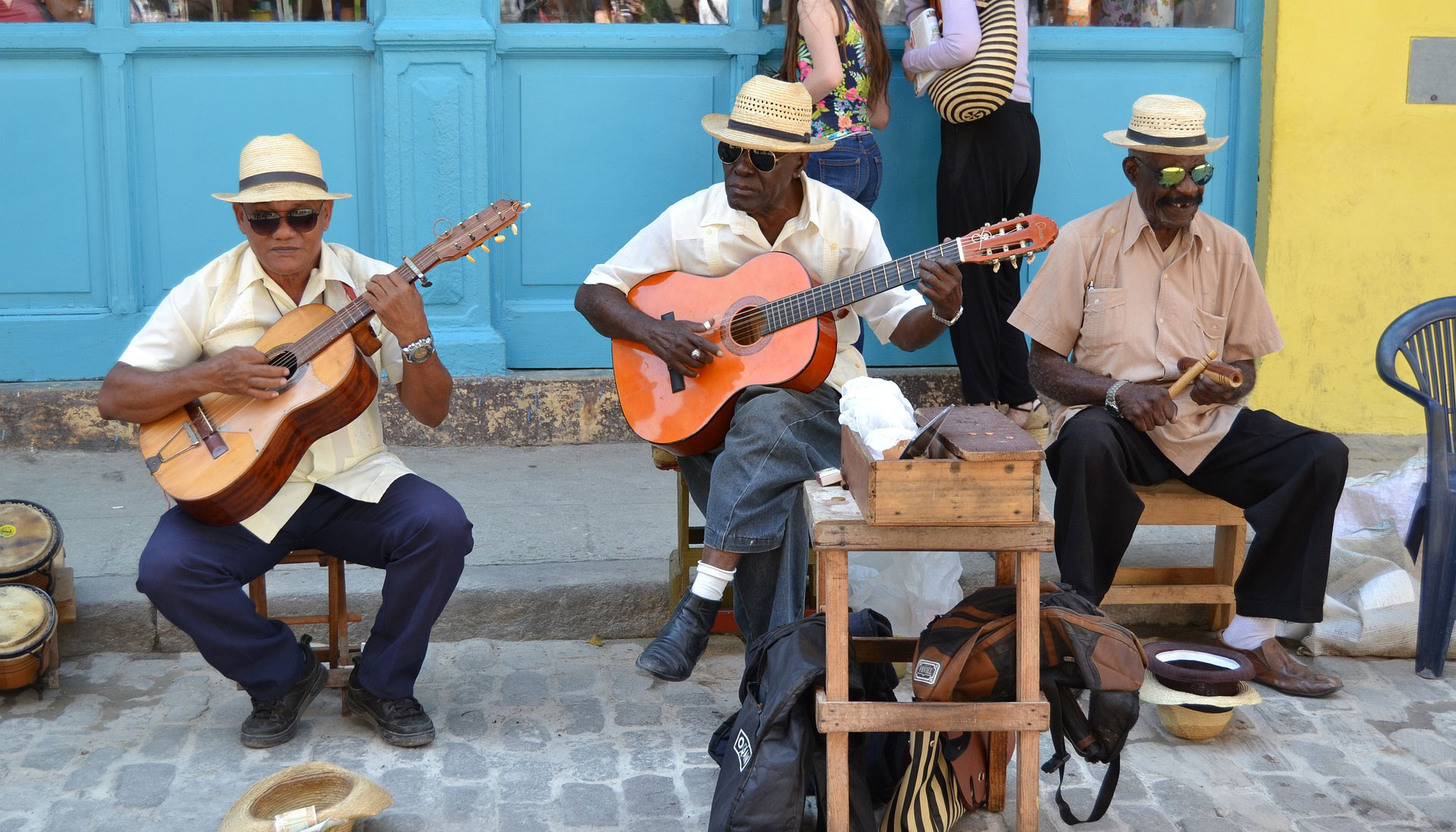
Although home to more than 11 million people, Cuban culture has been shrouded in mystery to most North Americans because of prolonged economic and political strain between the United States and Cuba. The Cuba People-to-people program pulls back the curtains on this Caribbean culture and gives volunteers a clear look at the beauties, struggles, and determination of the Cuban people. Cubanos are proud, educated, and often quite happy to share opinions. Isolated for years due to the “blockade” (as Cubans refer to the embargo the US imposed against the Communist state), their culture has been influenced by many cultures, none perhaps as heavily as Spain, Africa and the United States. Full of music, derelict buildings, joy and sorrow, the country offers few material pleasures but immense humanitarian rewards.
There has never been a more exciting time to take part in volunteer travel in Cuba! Imagine a culture where everyone is literate and has access to free medical care, no starving people. This is the Cuba of today. In stark contrast to North America, its southern neighbor also offers almost no material consumer goods. Experience this now, before long anticipated change comes with the passing of the Fidel Castro generation. Open music in streets everywhere, hardly any car traffic, smiles, most visitors are enchanted with a world unlike any they could imagine. The embargo has meant severely restricted commerce, and access to affordable food, but has also preserved and insulated a culture unique in the world.
Globe Aware’s Cuba People-to-people mission is to promote cultural awareness and sustainability. Cuba itself, due to its low infant mortality, high life expectancy, access to education, medical care, and human resources, generally takes the view that they are not in need of volunteers. The official stance of the Cuban government is that their economic issues stem from the embargo, which they refer to as “the blockade.” Hence unlike most Globe Aware programs, while we engage in three work projects throughout the week, we focus more time than usual on the Support for Cuban People cultural awareness part of our mission. You will get fantastic insight into how social issues are being addressed in terms of education, medical care and the like, and get a deep understanding of the real beauties and challenges of the Cuban culture.
Accommodations*
Located in the historic center of Old Havana, a 2-minute walk from the capitol and 10 minutes from the Plaza Vieja is your casa, in a neo-classical building from the 1920s, still retains the original floors, doors and windows, air-conditioned rooms and private bathrooms, kitchen, living room and balcony overlooking Old Havana. A typical Casa Particular room consists of two beds and an attached bath. Volunteers can expect to share their room with one other volunteer.
If you would prefer a single room, this can be arranged for an additional cost of $275.
*Because of the extraordinary interest in Cuba, we cannot guarantee the exact Casa particular where you are staying. The sooner you book, the more likely you will be housed at the main, central casa particular where our operations are based. The later you sign up, the more likely you be booked at a nearby casa particular with very similar standards.
Work projects
MEDICINAL PLANT GARDEN
With prescription drugs in short supply in Cuba, herbal remedies and other alternative treatments have become increasingly important, especially during and after the covid crisis. A famous Cuban began this project to help teach the community which endemic flora and fauna can be used to treat which ailments. Plant based and alternative homeopathic treatments are the only way many locals have to address their health needs. While healthcare is ostensibly free, there are usually very long waits for care. This is because many Cuban doctors are hired out to neighbouring countries in time of crisis, and visitors who pay are given priority access to care. Volunteers will be planting and harvesting these alongside Cuban people. LEARN MORE
COMMUNITY ARTS PROJECT
In an effort to beautify his neighborhood, a famed artist has been working on redecorated dozens of homes in a fishing town on the outskirts of Havana. He has created ornate and whimsical mosaic murals and domes that suit the personality of its residents, with chess park, giant boards and tables, dozens of tiles signed and donated by artists. It is a cherished part of Cuban culture, in much the same sense as Gaudi was in Barcelona, Spain. Globe Aware volunteers are likely to be involved in either painting or continuing the mosaic. LEARN MORE
KIDS WITH SPECIAL NEEDS
This project is on hold as of January 2025 but may be revived at any time, so we include it here so you know all possibilities. While Cuba does offer free education and has good public policies to protect differently abled people, it is not well equipped to offer specialized care for those with special needs, whether Down syndrome or on the autism spectrum. The result is that these children are usually cared for exclusively by their mothers, keeping their mothers from having paid work, putting further strain on their families' abilities to eat or achieve economic stability. After these children finish high school between the ages of 16 and 21, there is often no place to go. Volunteers may have the chance to work with these kids doing song, dance, exercises for their mind and bodies, providing relief for their mothers, and may also bring donations, provide funds for meals and more. LEARN MORE
MICRO-ENTERPRISE
With the economic downturn post covid and high unemployment, and insufficient access to food, many are looking for new ways to make sellable merchandise with inexpensive materials, such as assembling brooms for cleaning and knitting clothing. Volunteers may deliver tools and materials to these artisans and help them at their craft.
Click here to see video for bit of background on Cuba
Itinerary
The below itinerary constitutes a full-time program of activities undertaken in Cuba pursuant to the general licenses of the United States Department of Treasury Office of Foreign Assets Control.
You may also travel to Cuba under a specific license issued to you or your educational institution through the Office of Foreign Assets Control (OFAC). If you are a U.S citizen, you are responsible to understand how you can legally travel to Cuba. You can also consult the US Department of the Treasury.
This program is situated amongst beautiful, but out of repair cobblestone streets. Old Havana has not been updated to accommodate ramps and elevators, therefore participants should be able to walk uneven surfaces, up a ramp of stairs, and be able to walk for 10 to 15 minutes at a time several times throughout the day. Because it is a tropical environment, some volunteers may find this overly strenuous. We have had 7 year olds on the program who loved it and we have had an instance of a teenager who felt it was too much, so it is worth gauging the personality and fitness of any participating children. At the end of the day it can be akin to how one might feel after spending a half day at an amusement park or fair, in terms of walking.
6 Nights/7 Days
$2,700 each; single supplement: $275
*The above itinerary is subject to change, depending on availability and/or program scheduling. Unlike the majority of our programs, some meals are on your own. From years of experience we have learned that participants greatly prefer this option because of the huge and safe variety of meals in paladares that are available. Your on-site coordinator is always happy to make recommendations should you want them.
Updated Cuba Entry Requirements As Of October 2025
For travel to Cuba in October 2025, a tourist card is no longer required. Travelers must obtain an E-Visa in advance and complete the D’Viajeros Form within 72 hours of their flight. There are two options for obtaining the E-Visa: the U.S. route, which involves submitting a money order or check by mail and allows for direct questions but is slightly more expensive, or a Paris-based service, which is cheaper, provides a same-day QR code, but operates only in Spanish or French and in a different time zone. It is important to print all emailed documents for entry and exit, including your Globe Aware health insurance. If flight issues occur, such as government shutdowns, airport delays, or missed connections, the D’Viajeros Form remains valid for three days after the listed date. Overall, obtaining the E-Visa ahead of time is essential.
You can learn more details here: https://www.youtube.com/watch?v=bqTZsJH50hE
Arranging Your Airfare
We do not recommend arriving before the program begins. The schedule will include things that you would likely do on your own for the first day or two, so you will likely be duplicating activities, as we cannot change the schedule for those few that decide to come a couple of days early. There are now many options available to you when looking for flights into Cuba. We recommend doing a general search online with an airline search engine to see your options. Remember that you are traveling under a Humanitarian Projects, Support for the Cuban People, or Activities of Private Foundations license. You will typically need to select this during the ticket purchasing process. The exact verbiage of each license may vary slightly from airline to airline. Others may only ask if you are traveling under a General License, which all these licenses fall under.
The first and last day of the program is scheduled for arrival and departure, meaning that you can arrive at any time, and someone will be there to meet you at the airport or drop you off. The first scheduled activity of the program will be orientation and dinner on Saturday night. We recommend arriving prior to 6 pm to make those activities. The last scheduled activity will be breakfast at your casa particular. Check-out is typically around 11 am.
Regardless of how or where you are flying into Cuba, you will need to obtain a Cuban Tourist Card, also sometimes referred to as a visa. Each airline handles this a bit differently. Many US-based airlines partner with Cuba Travel Services for obtaining a tourist card. You should receive an email from your airline instructing you on their recommended method. For a quick and easy answer, each airline has a landing page with information relating to travel documents for Cuba and their recommendations. If you choose to apply for your visa online with Cuba Travel Services, the cost comes to $85. Please feel free to call our office if you have any questions regarding airfare in and out of Cuba.
The Price Includes
- All confirmations in the program
- Double room accommodations in private home in Havana Vieja with hot water, flushing toilets, access to electricity, kitchen with second story balconies overlooking the city
- Ground transportation by private, air-conditioned motor coach as well as transfers for group as appropriate
- English speaking, tour guide to accompany the group throughout the touring period.
- Preparatory reading materials
- Admission and fees to museums and program activities
- Honoraria for speakers and donations to organizations
- All breakfasts, 2 dinners, 2 lunches. Coordinator can provide you with lots of recommendations. Havana has plentiful options for safe, healthy, clean, tasty restaurants and private paladaors within walking distance of your ‘casa.” Many options from $2 to $20 per meal.
The price does not include the following:**
- Flights
- Expenses of a purely personal nature
- Conveyance fees used for private purposes
- Cuban airport taxes ($25 Euros or Cuban Peso)
- Travel Insurance
- Internet access (there is hourly internet for purchase at a hotel 2 very short blocks from your casa)
- Extra Beverages
- Tips for Bellmen, restaurants or guides and drivers. (We suggest that you budget $25 to $30 from each person for the guide and the same for the driver.)
- Aside from the aforementioned breakfasts, two dinners, and two lunches, travelers are responsible for all other meals.
The price herein contained may be subject to increase by reason of an external event or set of circumstances not reasonably foreseen when the contract was agreed and beyond our control. Such circumstances may include but are not limited to unannounced airplane ticket price rises, which affect travel or availability of travel to the host country.
We cannot accept any responsibility for such increases that may occur but will endeavor using all reasonable efforts to mitigate any such increases as is possible.
Any changes to a final signed contract including the itinerary, may result in a price change
Subject to approval, you will be traveling under a general license to travel to Cuba from the Office of Foreign Assets Control (OFAC) of the US Treasury Department.
Cancellations
We reserve the right to cancel this program in the event that our participants’ and staff’s safety and security are in jeopardy. In the event that we decide to cancel the program for reasons beyond our control (which term will be defined as any acts of government, war, revolution or natural disaster in the destination country, which as agreed between the parties herein will prevent us from organizing a program consistent with our program standards at any time prior to the departure date, we will refund to each participant all payments received, but cannot accept responsibility for any losses incurred to any participants by this cancellation although we will make every reasonable effort to assist the passengers in recouping their losses.